返回部落格
How AI integrates with every major hotel PMS: the complete 2026 guide
Tom Beirnaert2026年3月9日20 分钟阅读

How AI integrates with every major hotel PMS: the complete 2026 guide

In 2026, the future of hospitality hinges on seamless AI integration with hotel Property Management Systems (PMS), transforming static data into dynamic, revenue-generating guest experiences. Vertize's Lynn, an AI concierge, connects effortlessly with major PMS platforms, delivering 24/7 multilingual support and personalized upselling across voice, chat, and avatar channels.

Share:X / TwitterLinkedIn

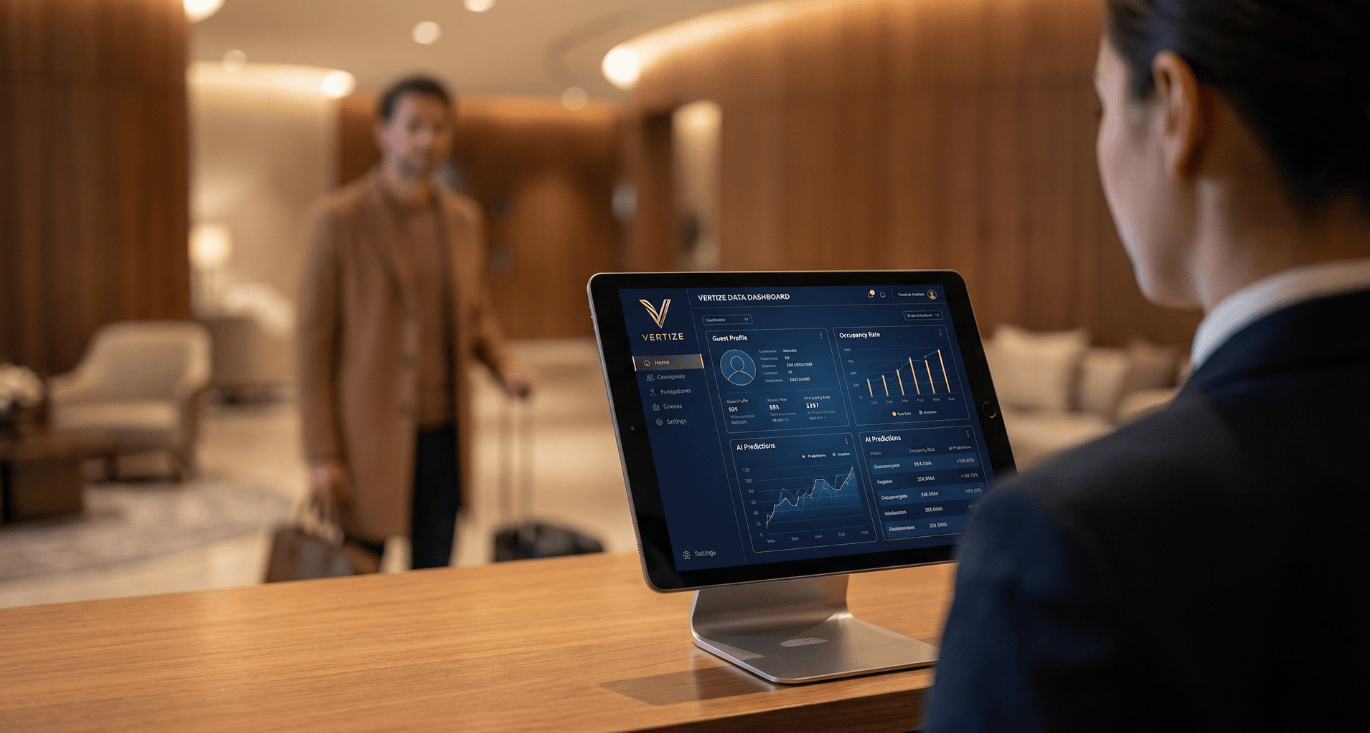
AI integration with a hotel PMS connects your property management system's operational data reservations, guest profiles, room status, billing to an intelligence layer that can act on that data in real time. This connection turns a static system of record into a responsive, revenue-generating engine. In 2026, the hotels winning on guest experience and margins are the ones where AI and PMS talk to each other continuously, not in silos.

Post 1 How AI integrates with every major hotel PMS.png

The hotel PMS market has crossed a tipping point. Cloud-based platforms now account for more than 80% of market share, and the global PMS market is projected to grow from roughly $3.6 billion in 2024 to $8.5 billion by 2034. Over two-thirds of hotel chains are actively reviewing their PMS strategy right now and AI capability has become the single biggest factor driving those decisions.

Yet here's the disconnect. An estimated 98% of hotels have begun using AI in some capacity, but only 32% report that it's embedded across most of their operations. The gap between "experimenting with AI" and "generating measurable ROI from AI" almost always comes down to one thing: how well the AI layer connects to the PMS.

This guide breaks down exactly how that connection works across the five dominant PMS platforms, what you can realistically expect in terms of return on investment, and how to evaluate whether your current setup is ready for an intelligence upgrade.

What makes this moment unique is that 77% of hoteliers plan to invest 5–50% of their IT budgets into AI tools. The question hotel operators face isn't whether to integrate AI with their PMS, it's how to do it well, with the platform they already have.

What's the difference between a PMS and an AI intelligence layer?

Think of it as a separation of concerns. Your property management system is the system of record, it holds the truth about your rooms, your rates, your reservations, and your guests. It manages structured data: who booked what, at which price, for which dates. The PMS is the brain that keeps the lights on.

An AI intelligence layer is the system of intelligence it sits on top of your PMS and adds the ability to interpret, predict, personalize, and act. When a guest books a suite for their anniversary, the AI concierge detects the occasion and proactively offers a spa package via WhatsApp, in the guest's language, at 2 a.m. if needed. When call volume spikes on a Saturday morning, the AI voice agent picks up every call, answers booking questions accurately, and writes confirmed reservations back into the PMS.

That's the model behind Vertize's Lynn, an AI concierge that connects directly to major PMS platforms and acts as the guest-facing intelligence layer across voice, chat, and avatar channels.

Neither system replaces the other. The PMS without AI is functional but passive. AI without PMS data is guessing. The combination is what creates operational leverage.

How do AI tools actually connect to a PMS?

The technical interface relies on RESTful APIs and webhooks that enable real-time, bi-directional data flow between both systems. When a new booking hits the PMS, it pushes that event to the AI layer. When the AI layer processes a guest request — say, a late checkout — it queries the PMS for availability and writes the updated checkout time back.

Here's how that data flow works in practice — using a dedicated AI concierge like Lynn connected to a hotel PMS:

Direction

What triggers it

What the AI concierge does

What changes in the PMS

PMS → AI

New booking created

Lynn sends a proactive welcome message via WhatsApp in the guest's language

Guest profile updated with message status

AI → PMS

Guest requests late checkout via chat

Lynn checks room availability, applies pricing rules, confirms the request

Checkout time extended, charge posted to folio

PMS → AI

Housekeeping marks room clean

Lynn sends a "your room is ready" notification to the guest

Notification logged in guest record

AI → PMS

Guest books spa via voice call or chat

Lynn verifies spa slot availability, confirms booking, answers follow-up questions

Itinerary updated, charge added to billing

PMS → AI

Guest checks in

Lynn triggers personalized upsell offers based on profile data and stay context

Upgrade or service added to reservation if accepted

The quality of this connection depends entirely on how open the PMS's API ecosystem is. Some platforms offer thousands of well-documented API endpoints. Others are still catching up. That difference matters enormously when you're evaluating which AI tools will actually work with your stack.

What AI features does Oracle OPERA Cloud offer?

Oracle Hospitality's OPERA Cloud remains the enterprise benchmark, deployed in over 40,000 properties worldwide with a 31% year-over-year increase in cloud properties in FY2025. Major rollouts include Accor's global deployment across 110 countries and IHG's adoption across EMEAA and the Americas. As a system of record, OPERA Cloud is unmatched in scalability and complex multi-property reporting.

The backbone of Oracle's integration ecosystem is the Oracle Hospitality Integration Platform (OHIP), which provides access to over 3,000 APIs. The broader marketplace hosts more than 1,200 integration partners, with over 650 live. This makes OPERA Cloud one of the most extensible PMS platforms on the market and one of the most API-ready for connecting a dedicated AI intelligence layer.

Where OPERA Cloud falls short is guest-facing AI. The platform excels at structured data management, but it doesn't natively provide conversational, multilingual guest interaction. There's no built-in AI voice agent to answer calls at 3 a.m., no WhatsApp-based concierge in 50+ languages, and no proactive upselling engine that messages guests with personalized offers at the right moment.

That's exactly the gap Vertize's Lynn fills. Lynn connects directly to OPERA Cloud via OHIP, adding 24/7 voice, chat, and avatar capabilities on top of Oracle's operational backbone, reading reservation data, guest profiles, and room status in real time to handle interactions, drive upsells, and recover missed calls.

API openness: Very high. 3,000+ endpoints, well-documented, enterprise-grade. The OHIP platform makes OPERA Cloud one of the strongest foundations for layering on a dedicated AI concierge.

How does Mews support AI integrations?

Mews has positioned itself as hospitality's "operating system" rather than just a database. With 15,000 customers across 85 countries and a $2.5 billion valuation, Mews raised $300 million in January 2026 to develop advanced automation capabilities. In February 2026, Mews was named AAHOA's official PMS, representing roughly 60% of US hotels.

Mews's technical architecture is built around a semantic layer, a unified data model that gives connected systems the contextual understanding needed to make accurate decisions. This is a deliberately integration-friendly approach. Rather than just exposing raw database fields, Mews structures its data so that external applications can understand relationships and intent, not just numbers. Its open API philosophy powers a marketplace with over 1,000 integrations.

As a system of record, Mews is one of the strongest platforms available. Its automation-first architecture handles operational workflows like payments, check-in, and housekeeping coordination with minimal manual intervention. The emphasis on "user disengagement" removing the screen between the hotelier and the guest aligns perfectly with the idea that the PMS should run in the background while an AI intelligence layer handles the guest-facing interaction.

But that guest-facing layer is precisely what most Mews properties still need to add. The PMS manages the data and workflows brilliantly. What it doesn't provide is a multilingual AI concierge that answers voice calls in 50+ languages, manages conversations across WhatsApp, Messenger, and Instagram simultaneously, or proactively suggests upgrades based on real-time guest profiles. Lynn by Vertize plugs directly into Mews's semantic layer to turn operational data into personalized, revenue-generating guest interactions across every channel.

API openness: Very high. Open API-first design, 1,000+ marketplace integrations, semantic data layer that makes it one of the best PMS foundations for AI concierge deployment.

What AI capabilities does Cloudbeds provide?

Cloudbeds serves over 20,000 properties in 150 countries, with particular strength in the independent and mid-sized hotel segment. As an all-in-one suite, Cloudbeds bundles property management, channel management, booking engine, and revenue tools into a single platform, making it one of the most accessible options for operators who want a unified tech stack.

The Cloudbeds marketplace hosts over 350 integration partners. The platform has invested heavily in data analytics and demand forecasting, and its integrated approach means there's a wealth of operational data flowing through the system, booking patterns, channel performance, rate fluctuations, and guest behavior signals.

However, the all-in-one design also means the API surface is more curated than fully open. Cloudbeds provides strong support for established integration categories, but the tighter ecosystem can require more coordination when connecting specialized external solutions.

The biggest gap for Cloudbeds properties remains guest-facing AI communication. The platform manages operational data effectively, but it doesn't offer a built-in AI concierge that answers phone calls, handles WhatsApp conversations in 50+ languages, or drives personalized upselling through omnichannel messaging. For independent and mid-sized hotels exactly the segment Cloudbeds serves those capabilities often deliver the highest relative ROI, because these properties typically can't afford multilingual, 24/7 front desk staffing.

Vertize's Lynn integrates with Cloudbeds to bridge this gap, connecting to reservation data, guest profiles, and room status to power voice, chat, and avatar interactions that turn routine inquiries into revenue opportunities, all without adding headcount.

API openness: Moderate to high. 350+ marketplace partners. More curated than OPERA or Mews due to the all-in-one design, but well-supported for connecting a dedicated AI intelligence layer.

How does Stayntouch handle AI integration?

Stayntouch, now part of Shiji Group, targets the urban boutique and mobile-first hotel segment. Named Hotel PMS of the Year in May 2025, Stayntouch maintains a 97% client retention rate and claims over 1,200 best-in-class integrations. Their Gen-2 platform delivers 30–35% performance improvements during high-demand periods compared to previous versions.

What makes Stayntouch distinctive is its emphasis on tablet-based workflows and contactless guest journeys. The platform is designed around the idea that front desk interactions should be mobile, flexible, and fast extending to self-service scenarios like lobby kiosks, in-room tablets, and digital check-in flows. This mobile-first philosophy makes it an ideal operational foundation for properties that want to reduce queues and empower guests.

Stayntouch's integration ecosystem of 1,200+ partners is extensive, and the platform has been expanding its capabilities. But the PMS's core strength remains structured operations: room management, rate configuration, guest profiles, and billing. The conversational, multilingual guest communication layer — the part that generates revenue through upselling, recovers missed calls, and keeps guests engaged throughout their stay — is where a dedicated AI intelligence layer adds the most value.

For Stayntouch properties, connecting an AI concierge like Lynn by Vertize means pairing that mobile-first operational foundation with a guest interaction engine that works across voice, WhatsApp, Messenger, and in-room tablets. Lynn reads Stayntouch data in real time and uses it to personalize every touchpoint from pre-arrival messages to checkout upsells in the guest's preferred language and channel.

API openness: High. 1,200+ integrations, strong emphasis on mobile-first and contactless workflows that pair naturally with an AI-driven guest experience layer.

What AI features does Infor HMS include?

Infor HMS serves the enterprise, casino, and resort segment properties with complex operational requirements that often span multiple revenue outlets (gaming floors, spas, golf courses, multiple F&B venues). Infor was named a Leader in the IDC MarketScape 2025 for hospitality, and its deep functional depth makes it a go-to choice for large-scale operators managing intricate, multi-outlet businesses.

The platform's enterprise-grade integration middleware supports connections to the broader Infor CloudSuite ecosystem, which is valuable for operators already running Infor's ERP, supply chain, or HR tools. Infor offers strong back-office analytics and revenue management capabilities, giving enterprise operators the data infrastructure they need to optimize pricing and forecast demand across complex property portfolios.

Where Infor HMS has the most significant gap is guest-facing communication. The platform is built for operational depth, not conversational AI. It doesn't natively offer multilingual voice agents, omnichannel chat support, or proactive guest messaging that drives ancillary revenue. For casino resorts and large properties with high guest volume and diverse international clientele, that gap represents substantial lost revenue — every unanswered call and every missed upsell compounds across hundreds or thousands of rooms.

Connecting Lynn by Vertize transforms the equation. Lynn integrates with Infor HMS to add 24/7 voice handling, multilingual chat across WhatsApp, Messenger, and other channels, and data-driven upselling calibrated to each guest's profile. The result is a complete stack where Infor manages the operational complexity and Lynn manages the guest relationship.

API openness: Moderate to high. Enterprise-grade middleware, strong for back-office and analytics integrations. Guest-facing AI communication is the primary extension point where dedicated solutions deliver the most impact.

What's the business case for adding AI to your hotel PMS?

The ROI data on hotel PMS AI integration is no longer theoretical, it's documented across thousands of properties. The financial impact typically shows up across three dimensions: revenue growth, cost reduction, and guest satisfaction improvement.

Here are the numbers that matter for a mid-sized property:

Metric

Typical performance impact

Estimated annual financial equivalent

Direct booking increase

8–12% growth

$35,000+ per property

Labor cost reduction

20–30% saving

$180,000+ for a 450-room hotel

Ancillary revenue (upsells)

23% increase

$180–$320 per available room

Missed call recovery

87% reduction

Up to $27,000 per location

RevPAR improvement

5–15% increase

Varies by ADR and occupancy

Guest satisfaction score

8–12 point improvement

Measurable impact on repeat bookings and review ratings

Behind these numbers, the mechanism is straightforward. AI-driven dynamic pricing generates 15–25% revenue increases within the first year for most implementations. AI-powered chatbots connected to PMS data deliver up to a 35% increase in booking conversion rates and a 25% jump in direct bookings. Context-aware recommendations that pull from PMS guest profiles achieve 45% conversion rates, nearly four times the 12% typical for generic, non-personalized approaches.

The staffing impact is equally significant. Hotels using AI to automate routine inquiries report front desk teams freed to focus on high-touch interactions. Administrative costs drop by an average of 20%, with some properties reporting reductions up to 40%. And since AI agents don't need breaks, shift changes, or sick days, service consistency during nights, weekends, and holiday spikes improves dramatically.

The guest preference data reinforces the case: 74% of travelers want hotels to use AI for tailored services, 73% prefer contactless check-in, and 86% appreciate AI-based personalization. But guests want AI for quick, routine tasks and 24/7 availability, while preferring human interaction for emotionally complex situations. A well-integrated AI layer handles the routine category brilliantly, freeing your team to excel at the moments that actually require a human touch.

The generational split is worth noting too. Roughly 78% of Gen Z travelers prefer AI concierge services for instant needs, while only about 23% of Baby Boomers are comfortable with AI-driven interactions. That doesn't mean older demographics reject AI, it means the implementation needs to be seamless enough that they don't notice it's AI handling the initial interaction.

Real-world case studies underscore these numbers. One luxury travel brand generated over $300,000 in new revenue within 90 days of deploying a conversational booking assistant connected to its PMS. Hilton Taipei Sinban reported 30% growth in F&B revenue after deploying AI voice assistants in guestrooms. And properties using AI to manage guest sentiment proactively are seeing an average 0.7-star improvement in online review ratings, a meaningful shift when a single star on TripAdvisor or Google influences thousands of booking decisions.

From assistive to agentic: where is hotel AI heading?

The hospitality industry is moving through a clear evolution in how AI operates alongside PMS platforms, and understanding where each system sits on that spectrum helps you make better purchasing decisions.

Assistive AI is where most of the industry started. The AI suggests actions and drafts responses, but a human reviews and approves every output before it reaches the guest. Functional, but slow enough to negate much of the efficiency benefit.

Autonomous AI within guardrails is where the leading solutions are now. AI agents handle 85–90% of routine interactions without human intervention, answering questions about breakfast hours, processing checkout requests, sending booking confirmations in the guest's language, while escalating complex situations to staff. The AI operates within predefined rules the hotel sets, so it never goes rogue but doesn't create bottlenecks either.

Agentic AI is the frontier, and it's where dedicated AI solution providers are leading the way. Agentic AI doesn't just respond to requests it reasons, plans, and executes multi-step actions to achieve specific business outcomes. An agentic AI concierge could, for example, detect that a VIP guest's flight is delayed via an external data source, automatically adjust the check-in time in the PMS, notify housekeeping of the schedule change, and send the guest a personalized message with dinner recommendations near the airport, all without a human touching the process.

This is the direction Vertize is building toward with Lynn. Rather than waiting for PMS vendors to build guest-facing AI into their own platforms, a process that, by definition, would only work within each vendor's walled garden, a dedicated AI intelligence layer can operate across any PMS, delivering the same agentic capabilities whether a hotel runs OPERA, Mews, Cloudbeds, or any other platform.

The PMS vendors themselves recognize this dynamic. Most are investing in API openness and integration ecosystems precisely because they understand that specialized AI providers can move faster on guest-facing innovation than a PMS company optimizing for operational reliability. The PMS should do what it does best (managing rooms, rates, and reservations), while a purpose-built AI layer handles what it does best (understanding and serving guests).

For most hotels, the practical question isn't "should I go agentic?" but "is my PMS architecture open enough to support whatever AI capability I want to add next?" Cloud-native platforms with robust API ecosystems give you that flexibility. Legacy on-premise systems increasingly don't.

The multiplier effect of moving along this spectrum is real. When an AI voice agent handles a routine inquiry about breakfast hours, it's not just saving a few minutes of staff time, it's improving response time from minutes (or hours, for a 3 a.m. inquiry) to seconds. That speed directly correlates with higher guest satisfaction, fewer negative reviews, and higher conversion rates when the inquiry is about availability or booking. Research shows hotels miss up to 40% of calls during peak seasons without automated assistance, and 73% of international guests experience frustration with language barriers. A PMS-connected AI concierge resolves both problems simultaneously.

The market trajectory adds urgency. McKinsey estimates AI can automate up to 40% of hospitality tasks. The AI in hospitality market grew from $15.7 billion in 2024 to a projected $20.5 billion in 2025, a 30.5% compound annual growth rate. Hotels that integrate now are building competitive moats. Hotels that wait are falling behind a curve that's steepening every quarter.

How AI agents are becoming the new front door of hospitality

The way guests discover and interact with hotels is changing fundamentally. By 2026, travelers are increasingly using intelligent agents — Apple Intelligence, Google Gemini, ChatGPT — to find, evaluate, and book stays. These AI agents prioritize hotels whose data is machine-readable, whose services are structured for automated discovery, and whose availability and pricing are always current.

This means your PMS data needs to flow into formats that external AI agents can access and act on. Hotels that synchronize real-time pricing, availability, and guest offerings through a connected intelligence layer will be "found" by these AI intermediaries. Hotels relying on static content and manual rate updates will increasingly be invisible.

A solution like Lynn ensures that a hotel's data is always current, always machine-readable, and always connected to the channels guests and AI agents use to make decisions. Hotel PMS AI integration isn't just an operational upgrade anymore — it's becoming a distribution strategy.

Frequently asked questions

Can I add AI to my existing hotel PMS?

Yes. All major cloud-based PMS platforms — Oracle OPERA Cloud, Mews, Cloudbeds, Stayntouch, Infor HMS — support AI integration through APIs and marketplace ecosystems. You don't need to replace your PMS to add an AI intelligence layer. Solutions like Vertize's Lynn connect to your existing system via API and extend it with guest-facing capabilities: multilingual voice support, omnichannel chat, personalized upselling, and 24/7 availability across every touchpoint.

Which hotel PMS has the best AI features?

The better question is: which PMS has the best foundation for adding AI? The PMS itself is a system of record, its job is to manage rooms, rates, reservations, and billing reliably. The guest-facing AI capabilities that drive revenue and satisfaction, multilingual voice, omnichannel chat, personalized upselling, 24/7 availability, come from the intelligence layer you connect to it. Oracle OPERA Cloud leads in API breadth (3,000+ endpoints), Mews offers the most integration-friendly data architecture, Cloudbeds provides strong all-in-one operational coverage, Stayntouch excels at mobile-first workflows, and Infor HMS delivers the deepest enterprise complexity handling. All five support integration with dedicated AI concierge solutions like Vertize's Lynn.

How long does AI integration with a PMS take?

With an experienced integration provider that already has established PMS connectors, most properties go live within 7 to 14 days. Vertize's deployment process, for example, includes a discovery phase, property-specific training for Lynn (menus, room types, policies, brand voice), PMS API connection, messaging channel setup, and testing, all typically completed within two weeks. Enterprise deployments across multiple properties may take longer depending on the complexity of the PMS configuration.

What data does AI need from my PMS to work effectively?

At minimum, AI needs real-time access to reservation data, guest profiles, room inventory and status, rate and availability information, and billing/folio data. The more data streams available, including housekeeping status, F&B systems, spa bookings, and guest preference histories, the more personalized and effective the AI becomes. Data hygiene matters: consolidated, deduplicated guest profiles significantly improve AI accuracy.

Does AI replace my PMS or work alongside it?

AI works alongside your PMS, it never replaces it. The PMS remains your system of record: the source of truth for rooms, rates, reservations, and accounting. The AI layer is a system of intelligence that reads from and writes to the PMS, adding capabilities like conversational guest interaction, automated upselling, and 24/7 multilingual support that the PMS isn't designed to provide. Think of it as adding a guest-facing brain to your hotel's operational backbone. That's the model Vertize's Lynn follows: Lynn doesn't replicate what your PMS does, she extends it into the channels and interactions where your guests actually are.

Is my PMS data secure when connected to an AI layer?

Reputable AI integration providers use encrypted API connections, follow data protection regulations (GDPR, local privacy laws), and operate under strict data processing agreements. The AI accesses PMS data through authenticated, permissioned API calls, the same way any approved marketplace integration connects. Always verify your AI provider's security certifications and data handling policies before deployment.

What's the minimum property size that benefits from PMS AI integration?

There's no minimum. AI-powered guest communication, automated upselling, and multilingual support benefit properties of any size. In fact, smaller independent hotels often see the most dramatic relative improvement because they typically can't afford the 24/7 multilingual staff coverage that a solution like Lynn provides instantly upon deployment. The ROI is proportional to inquiry volume, upsell opportunity, and the gap between current and ideal guest response times.

Not sure how AI fits with your current PMS? Talk to the Vertize team for a free integration assessment. We'll map what Lynn can do with your existing technology stack and show you where the highest-impact revenue and efficiency opportunities are.

Share:X / TwitterLinkedIn

準備好轉變您的飯店了嗎?

預約免費策略諮詢,了解 Lynn 如何在您的物業中實際運作。