
Ce que les hôteliers font de travers dans l'implémentation de l'IA (et comment éviter les mêmes erreurs)
De nombreux projets d'IA hôtelière échouent en raison d'une implémentation défectueuse, avec des problèmes tels que le choix d'outils avant de définir les problèmes et le saut des intégrations de données cruciales. Vertize propose un cadre pratique pour éviter ces pièges, garantissant que des solutions d'IA comme notre concierge intégré au PMS, Lynn, produisent de vrais résultats pour les hôteliers.
Ce que les hôteliers font de travers dans l'implémentation de l'IA (et comment éviter les mêmes erreurs)
TL;DR, La plupart des projets d'IA hôtelière échouent non pas parce que la technologie est mauvaise, mais parce que l'approche d'implémentation est défectueuse. Les hôtels achètent des outils avant de définir les problèmes, déploient des chatbots déconnectés de leur PMS, sautent les vérifications de qualité des données et lancent sans KPI mesurables. Le résultat : 82 % des hôtels prévoient d'étendre l'utilisation de l'IA en 2026, mais seulement 25 % disent qu'ils sont réellement prêts à l'adopter. Ce guide détaille les sept erreurs les plus courantes d'implémentation de l'IA hôtelière et propose un cadre pratique basé sur ce que font différemment les établissements performants.
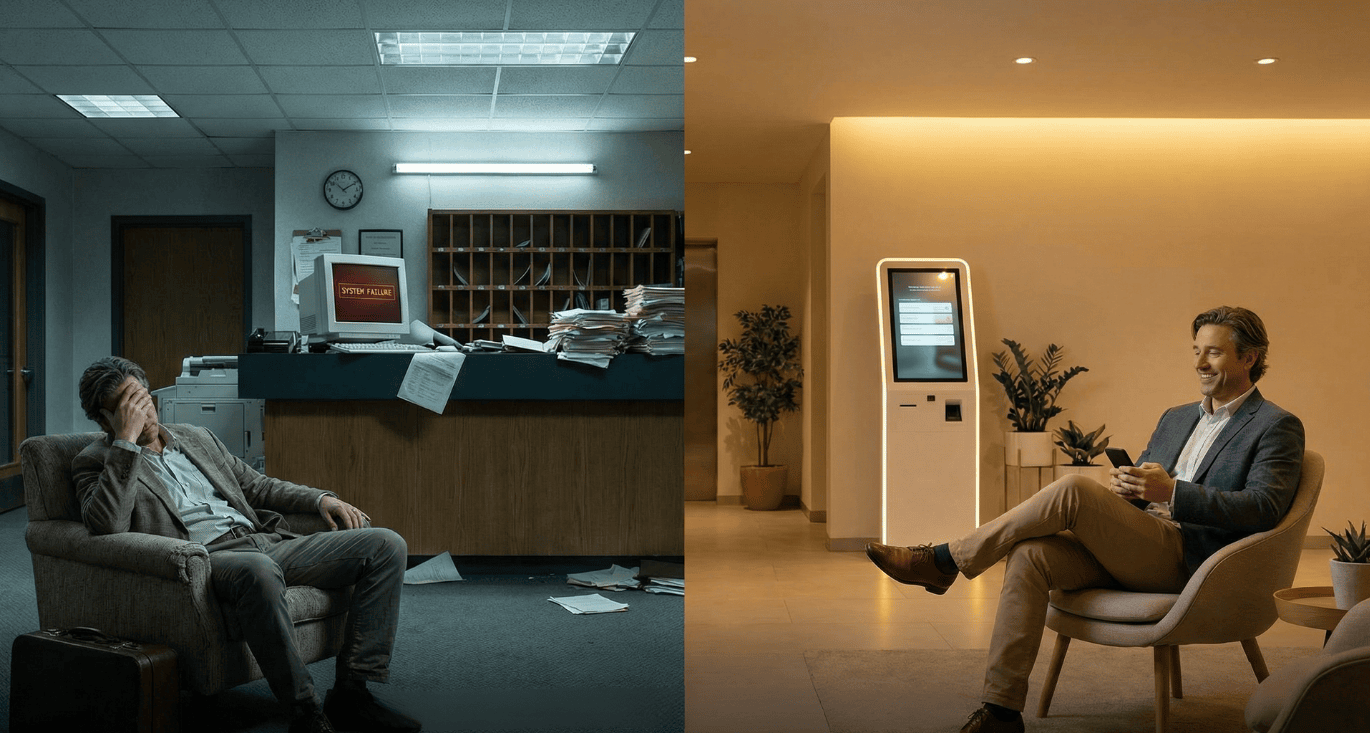
S'il y a une chose dont les hôteliers sont fatigués d'entendre parler, c'est l'intelligence artificielle. Les deux dernières années ont été un défilé de revendications « alimentées par l'IA » apposées sur chaque produit de la pile technologique hôtelière. Les systèmes de gestion des revenus qui existent depuis 20 ans sont soudainement « activés par l'IA » sans aucun changement technique significatif. Le résultat, comme l'a franchement déclaré PhocusWire en janvier 2026, est « des yeux qui roulent et un scepticisme justifié ».
Mais voici le problème avec le fait d'ignorer : les hôtels qui maîtrisent l'IA prennent de l'avance. Boston Consulting Group rapporte que les établissements utilisant la tarification dynamique alimentée par l'IA voient des gains de RevPAR allant jusqu'à 15 %. Hilton a identifié trois cas d'utilisation de l'IA qui ont été rentabilisés en six mois. Le Ritz-Carlton San Francisco a obtenu une amélioration de 20 % de la vitesse de nettoyage des chambres grâce à des plannings de ménage optimisés par l'IA.
La différence entre les hôtels qui obtiennent des résultats et ceux coincés dans le « purgatoire des pilotes » n'est pas quel outil d'IA ils ont acheté. C'est comment ils l'ont implémenté. Après avoir analysé les dernières recherches du secteur de Canary Technologies, Otelier, BCG et PhocusWire, les mêmes sept erreurs reviennent sans cesse.
Voici ce qu'elles sont, et comment les éviter.
Pourquoi tant de projets d'IA hôtelière commencent-ils par la mauvaise question ?
L'erreur d'implémentation de l'IA hôtelière la plus courante est de choisir un outil d'abord et de chercher un problème ensuite. Les hôtels sélectionnent souvent un chatbot IA parce qu'il est tendance, puis essaient de déterminer quel écart opérationnel il pourrait combler. Cela inverse la logique de chaque déploiement d'IA réussi dans le secteur.
L'Index des opérations hôtelières Otelier 2026 rend ce désalignement visible. Alors que les chatbots orientés clients sont le premier déploiement le plus courant (45 % des hôtels utilisent désormais des agents de webchat alimentés par l'IA, selon l'enquête de mars 2026 de Canary Technologies auprès de plus de 400 décideurs), les hôteliers eux-mêmes identifient la modélisation prédictive de la demande et la collaboration de données interservices comme leurs besoins en IA les plus précieux.
Le décalage est révélateur. Les hôtels achètent de la « visibilité » alors qu'ils ont besoin d'« infrastructure ».
Les implémentations réussies inversent la séquence. Elles commencent par identifier un goulot d'étranglement spécifique et mesurable : le volume d'appels qui submerge la réception la nuit, les opportunités de vente incitative perdues parce que le personnel ne peut pas engager les clients dans plusieurs langues, ou les temps de réponse mesurés en heures plutôt qu'en secondes. Ce n'est qu'ensuite qu'elles sélectionnent la capacité d'IA qui y répond.
L'approche de Hilton illustre bien cela. Sur 41 cas d'utilisation d'IA actifs dans 7 500 établissements, les trois qui ont été rentabilisés en six mois ciblaient des frictions opérationnelles claires : tarification dynamique (remplaçant les ajustements manuels lents des tarifs), messagerie automatisée aux clients (réduisant le volume d'appels) et enregistrement numérique (diminuant la congestion à la réception). Chacun a commencé par le problème, pas par le produit.
Que se passe-t-il lorsque les hôtels implémentent l'IA sans intégration PMS ?
Un chatbot IA qui ne peut pas accéder aux données de réservation, aux profils clients ou à l'inventaire des chambres est une page FAQ glorifiée. Il peut indiquer à un client les heures du petit-déjeuner, mais il ne peut pas traiter un départ tardif, reconnaître un VIP revenant ou déclencher une mise à niveau de chambre en fonction de la disponibilité. Cet écart entre information et action est là où la plupart des déploiements d'IA hôtelière stagnent.
Les chiffres confirment l'ampleur de ce problème. L'Index des opérations hôtelières Otelier 2026 a révélé que seulement 11 % des hôtels signalent une pile technologique entièrement intégrée. Cela signifie que 89 % des outils d'IA hôtelière fonctionnent dans un certain degré d'isolement des données, ce qui explique pourquoi 91 % des hôtels s'appuient encore sur des rapports manuels même dans des flux de travail supposément automatisés.
Lorsque l'IA fonctionne déconnectée du PMS, l'expérience client en souffre. Un client envoie un message pour prolonger son séjour. Le chatbot dit « Je vais vérifier pour vous » et puis... rien. La demande reste dans une file d'attente, quelqu'un vérifie manuellement la disponibilité, et au moment où une réponse arrive, le client a déjà appelé la réception ou réservé ailleurs.
Comparez cela avec un concierge IA intégré comme Lynn de Vertize, qui se connecte directement aux principales plateformes PMS (Mews, Oracle OPERA Cloud, Cloudbeds, Apaleo, et autres) via API. Lorsqu'un client demande un départ tardif via WhatsApp à minuit, Lynn vérifie la disponibilité en temps réel dans le PMS, confirme la prolongation, met à jour la réservation et répond dans la langue du client, le tout en quelques secondes. Aucune intervention du personnel nécessaire, aucun écart de données, aucun « écart d'action ».
L'intégration PMS n'est pas une fonctionnalité agréable à avoir. C'est ce qui sépare l'IA qui fonctionne vraiment de l'IA qui parle seulement.
Pourquoi traiter toute l'IA de la même manière conduit-il à de mauvais résultats ?
Toute « IA » n'est pas la même technologie, et ne pas comprendre les différences conduit à des attentes irréalistes et à des résultats décevants. L'analyse de PhocusWire de janvier 2026 a souligné que les hôteliers doivent distinguer trois types de technologie fondamentalement différents vendus sous l'égide de l'IA.
Les algorithmes basés sur des règles suivent une logique « si-alors » prédéfinie. Ils fonctionnent bien pour l'automatisation de tâches simples mais ne peuvent pas gérer des demandes nuancées des clients. Les modèles d'apprentissage automatique traditionnels analysent les données historiques pour prévoir la demande, optimiser les prix ou prédire les besoins de maintenance. Ils sont puissants pour la reconnaissance de modèles mais ne comprennent pas le langage ni l'intention. Les grands modèles de langage (LLM) comprennent le langage naturel, prennent en charge les conversations en plusieurs étapes et peuvent gérer des interactions complexes avec les clients dépendant du contexte dans plusieurs langues.
Le problème survient lorsque les hôtels achètent un chatbot basé sur des règles en s'attendant à la profondeur conversationnelle d'un LLM, ou lorsque les fournisseurs rebaptisent un algorithme de tarification vieux de 20 ans comme « alimenté par l'IA » sans aucune mise à niveau technique significative. Ce n'est pas seulement une nuisance marketing. Cela conduit à de véritables échecs opérationnels : réponses rigides qui frustrent les clients, réponses « hallucinatoires » qui nuisent à la confiance, ou recommandations génériques qui manquent la touche personnelle.
La leçon pratique : demandez aux fournisseurs d'expliquer exactement quel type d'IA leur produit utilise, comment il gère les cas limites, et s'il est « ancré » dans les données vérifiées de votre hôtel (votre PMS, vos menus, vos politiques) pour éviter les réponses incorrectes. Si un fournisseur ne peut pas répondre clairement à ces questions, cela vous en dit long.
Pourquoi la mentalité « l'IA remplace le personnel » se retourne-t-elle contre soi ?
Les hôtels qui abordent l'IA comme un outil de réduction des effectifs pour réduire les coûts obtiennent systématiquement de moins bons résultats que ceux qui la positionnent comme une couche d'augmentation du personnel. La raison est simple : les clients veulent toujours une interaction humaine pour les moments émotionnellement complexes, et le personnel qui se sent menacé par l'IA résiste à l'utiliser.
Les données soutiennent le modèle d'augmentation. Selon une étude h2c de 2025 portant sur 171 chaînes hôtelières, 74 % des hôtels indépendants et 62 % des grandes chaînes considèrent le « contact humain » comme un différenciateur critique et non négociable. Parallèlement, l'enquête 2026 de Canary Technologies a identifié la formation du personnel (38 %) comme l'un des trois principaux obstacles à l'adoption de l'IA, aux côtés de la sécurité des données (43 %) et de la complexité de l'intégration (40 %).
Les hôtels qui y parviennent reformulent entièrement la proposition de valeur. L'IA gère les tâches répétitives et à fort volume (répondre à « Quel est le mot de passe Wi-Fi ? » pour la 200e fois, traiter les demandes d'enregistrement standard à 3h du matin, traduire les demandes des clients dans plus de 50 langues) afin que le personnel puisse se concentrer sur ce que les humains font de mieux : reconnaître qu'un client passe une mauvaise journée, offrir une mise à niveau à un couple célébrant un anniversaire, ou résoudre une plainte avec une empathie sincère.
C'est exactement le modèle derrière Lynn de Vertize. Lynn gère plus de 80 % des demandes de routine des clients 24/7 sur les canaux chat, voix et avatar, libérant les équipes hôtelières pour investir leur temps dans des interactions clients à forte valeur ajoutée qu'aucune IA ne peut reproduire. La réception ne disparaît pas. Elle se transforme d'un point de contrôle transactionnel en un rôle d'expérience client.
Qu'est-ce qui fait de la qualité des données le tueur silencieux de l'IA dans l'hôtellerie ?
L'IA n'est aussi bonne que les données qu'elle traite. Si votre PMS contient des profils clients obsolètes, des catégories de chambres incohérentes ou des données de réservation fragmentées dispersées sur des systèmes déconnectés, même l'IA la plus sophistiquée produira des résultats peu fiables.
L'Index des opérations hôtelières Otelier 2026 quantifie ce problème de manière frappante. Seulement 15 % des opérateurs hôteliers expriment une grande confiance dans l'exactitude et l'actualité de leurs données opérationnelles. Seulement 25 % disent qu'ils sont prêts à adopter l'IA, 40 % disant qu'ils ne le sont pas du tout. La raison principale invoquée n'est pas le coût de la technologie ni la résistance du personnel. C'est la donnée : fragmentée, peu fiable et déconnectée entre les systèmes.
L'implication pratique : avant d'investir dans un outil d'IA, les hôtels doivent auditer leurs fondations de données. Les profils clients sont-ils complets et à jour ? Les données de réservation circulent-elles proprement entre le PMS, le CRM et le gestionnaire de canaux ? Les types de chambres, codes tarifaires et inventaire sont-ils cohérents entre les systèmes ?
C'est pourquoi l'intégration PMS compte tant en pratique. Un concierge IA qui se connecte directement au PMS via API travaille avec des données en direct, structurées et vérifiées plutôt qu'avec un export statique déjà obsolète au moment du chargement. L'accès aux données en temps réel n'est pas un luxe technique. C'est le préalable à une IA en laquelle les clients peuvent réellement avoir confiance.
Pourquoi les déploiements d'IA « big-bang » échouent-ils plus souvent que les pilotes par phases ?
Les hôtels qui tentent d'automatiser cinq services simultanément finissent presque toujours par obtenir des résultats médiocres partout et d'excellents résultats nulle part. La complexité de gérer le changement, de former le personnel, d'intégrer les systèmes et de mesurer les résultats sur plusieurs cas d'utilisation à la fois submerge même les équipes d'exploitation bien dotées en ressources.
Les preuves favorisent le démarrage petit et l'extension après un succès prouvé. Hilton n'a pas lancé 41 cas d'utilisation d'IA en une fois. Ils ont identifié les goulots d'étranglement à forte répétition et à forte friction, mené des pilotes ciblés, mesuré des KPI spécifiques et n'ont étendu que les cas d'utilisation qui ont démontré un ROI clair en six mois. Selon BCG, moins d'une entreprise hôtelière sur dix utilise l'IA avancée pour produire de grands résultats, mais 25 % ont atteint le stade de « mise à l'échelle de l'IA » où une stratégie définie produit des retours sur plusieurs activités.
Un point de départ pratique pour la plupart des hôtels : déployer l'IA sur un seul canal à fort volume d'abord. La messagerie client via webchat ou WhatsApp est un point d'entrée naturel car elle a des métriques de succès claires (temps de réponse, taux de résolution, satisfaction client), une fréquence élevée (des centaines de demandes par jour dans les établissements occupés) et des économies de temps du personnel immédiates.
Le modèle d'implémentation de Vertize suit cette approche par conception. La plupart des établissements sont opérationnels en 7 à 14 jours, en commençant par la messagerie client sur les canaux que leurs clients utilisent déjà (WhatsApp, Zalo, WeChat, Messenger ou webchat). Une fois que le canal initial prouve sa valeur, Lynn s'étend à la voix, aux kiosques de hall et aux tablettes en chambre, en s'appuyant sur une fondation validée par les données plutôt que sur un déploiement d'entreprise fantaisiste.
Comment savoir si l'IA hôtelière fonctionne vraiment sans KPI définis ?
« Cela devrait aider les clients » n'est pas un KPI. Ni « on dirait que cela fait gagner du temps ». Sans métriques de succès prédéfinies et mesurables, les hôtels ne peuvent pas déterminer si un outil d'IA apporte de la valeur, ce qui signifie qu'ils ne peuvent pas justifier un investissement continu, et le projet meurt discrètement.
L'enquête de mars 2026 de Canary Technologies a révélé que si 82 % des hôtels prévoient d'augmenter l'utilisation de l'IA, beaucoup manquent encore de cadres structurés pour mesurer les performances de l'IA. Cela crée un cycle où les hôtels investissent dans l'IA, ne peuvent pas prouver son impact, deviennent sceptiques et abandonnent l'outil ou continuent de payer pour quelque chose qu'ils ne peuvent pas évaluer.
Les KPI d'IA hôtelière efficaces tombent dans quatre catégories :
Efficacité opérationnelle : taux d'automatisation (pourcentage de demandes clients traitées sans intervention du personnel), temps de réponse moyen et heures de personnel récupérées par quart.
Impact financier : taux de conversion des ventes incitatives, variation du revenu par chambre disponible (RevPAR) et attribution des réservations directes.
Expérience client : scores CSAT, sentiment des avis en ligne et taux de réservations répétées.
Fiabilité : taux de succès du traitement automatisé, taux d'escalade vers le personnel humain et exactitude des données.
Les cibles de référence varient selon le type et l'échelle de l'établissement, mais le principe est universel : définissez à quoi ressemble le succès avant d'activer le système, puis mesurez sans relâche après le lancement.
À quoi ressemble une implémentation d'IA hôtelière réussie ?
Les hôtels qui obtiennent de vrais retours de l'IA partagent un schéma commun. Ils commencent par un problème opérationnel spécifique, s'assurent que leurs données PMS sont propres et intégrées, déploient sur un seul canal, définissent des KPI mesurables, positionnent l'IA comme un outil d'augmentation du personnel plutôt que de remplacement, et n'étendent qu'après que le premier cas d'utilisation a prouvé sa valeur.
Ce n'est pas de la théorie. C'est le modèle d'implémentation derrière chaque déploiement d'IA réussi dans l'hôtellerie aujourd'hui, du portefeuille de 41 cas d'utilisation de Hilton aux établissements boutique qui ont déployé la gestion des revenus par IA et ont vu des augmentations de revenus de 20 % en quelques mois.
Pour les hôtels qui veulent passer de la « fatigue de l'IA » aux « résultats de l'IA », la voie à suivre n'est pas d'acheter plus d'outils. C'est de corriger l'approche d'implémentation. Commencez par le problème. Intégrez avec le PMS. Définissez vos KPI. Lancez petit. Étendez ce qui fonctionne.
Et si vous avez besoin d'un concierge IA qui est intégré au PMS dès le premier jour, parle plus de 50 langues et fonctionne sur tous les canaux clients, c'est exactement ce que Vertize a construit Lynn pour faire. Pas comme un remplacement pour votre équipe, mais comme la couche d'intelligence qui les rend imparables.
Foire aux questions :
Quelle est la plus grande erreur commise par les hôtels lors de l'implémentation de l'IA ?
L'erreur la plus courante est de choisir un outil d'IA avant d'identifier le problème opérationnel qu'il doit résoudre. Les hôtels qui commencent par un goulot d'étranglement spécifique (comme des temps de réponse lents ou des opportunités de vente incitative manquées) puis sélectionnent la bonne capacité d'IA surpassent systématiquement ceux qui achètent la technologie d'abord et cherchent ensuite un cas d'utilisation.
Pourquoi les chatbots IA des hôtels déçoivent-ils souvent les clients ?
La plupart des échecs des chatbots remontent à un manque d'intégration PMS. Un chatbot sans accès aux données de réservation en direct, aux profils clients et à l'inventaire des chambres ne peut fournir que des informations génériques. Il ne peut pas exécuter des demandes comme des changements de chambre, des départs tardifs ou des recommandations personnalisées, ce dont les clients ont réellement besoin.
Combien un hôtel devrait-il investir dans l'IA en 2026 ?
Selon une enquête de Canary Technologies auprès de plus de 400 décideurs hôteliers (mars 2026), 85 % des hôtels prévoient d'allouer au moins 5 % de leur budget informatique aux outils d'IA. Le bon niveau d'investissement dépend des goulots d'étranglement spécifiques de votre établissement, mais commencer par un seul cas d'utilisation à fort impact (comme la messagerie client) minimise les risques tout en offrant des retours mesurables rapidement.
Quels KPI les hôtels devraient-ils suivre pour les performances de l'IA ?
Les quatre catégories essentielles sont l'efficacité opérationnelle (taux d'automatisation, temps de réponse), l'impact financier (conversion des ventes incitatives, variation du RevPAR), l'expérience client (scores CSAT, sentiment des avis) et la fiabilité (taux de succès du traitement, fréquence des escalades). Définissez des cibles avant le lancement et mesurez hebdomadairement.
Les hôtels devraient-ils remplacer le personnel par l'IA ?
Non. Les implémentations d'IA hôtelière les plus réussies augmentent le personnel plutôt que de le remplacer. L'IA gère les tâches répétitives à fort volume (demandes de routine, communication multilingue, suggestions de vente incitative) afin que les équipes hôtelières puissent se concentrer sur les interactions clients émotionnellement complexes et à forte valeur ajoutée qui nécessitent un contact humain.
Combien de temps prend une implémentation d'IA hôtelière typique ?
Les délais d'implémentation varient considérablement. Un déploiement ciblé sur un seul canal (comme le webchat ou WhatsApp) avec intégration PMS peut être opérationnel en 7 à 14 jours avec le bon partenaire. Les déploiements à l'échelle de l'entreprise sur plusieurs services et canaux prennent généralement 60 à 90 jours lorsqu'ils suivent une approche par phases.
Quelle est la différence entre l'IA basée sur des règles et les grands modèles de langage dans l'hôtellerie ?
Les systèmes basés sur des règles suivent une logique « si-alors » préprogrammée et fonctionnent pour l'automatisation simple mais ne peuvent pas gérer des conversations nuancées. Les grands modèles de langage comprennent le langage naturel, interprètent l'intention des clients et gèrent des interactions complexes en plusieurs étapes dans plusieurs langues. De nombreux fournisseurs commercialisent des outils basés sur des règles comme « alimentés par l'IA » sans clarifier cette distinction.
Related posts
Calendrier de mise en œuvre de l'IA pour les hôtels : à quoi s'attendre dans les 90 premiers jours
Découvrez comment Vertize transforme les opérations hôtelières avec l'IA en seulement 90 jours, avec une mise en servic…
Comment les hôtels sont découverts par ChatGPT, Gemini et Perplexity (et pourquoi le SEO traditionnel ne suffit plus)
Alors que les voyageurs demandent de plus en plus à ChatGPT, Gemini et Perplexity des recommandations d'hôtels au lieu…
Comment l'IA remplace la dépendance aux OTA : les données derrière le passage des hôtels aux réservations directes
Les OTA drainent silencieusement 15-25 % par réservation des hôtels, mais les concierges IA convertissent désormais le…
Prêt à Transformer Votre Hôtel ?
Réservez un appel stratégique gratuit et découvrez précisément comment Lynn fonctionnerait dans votre établissement.