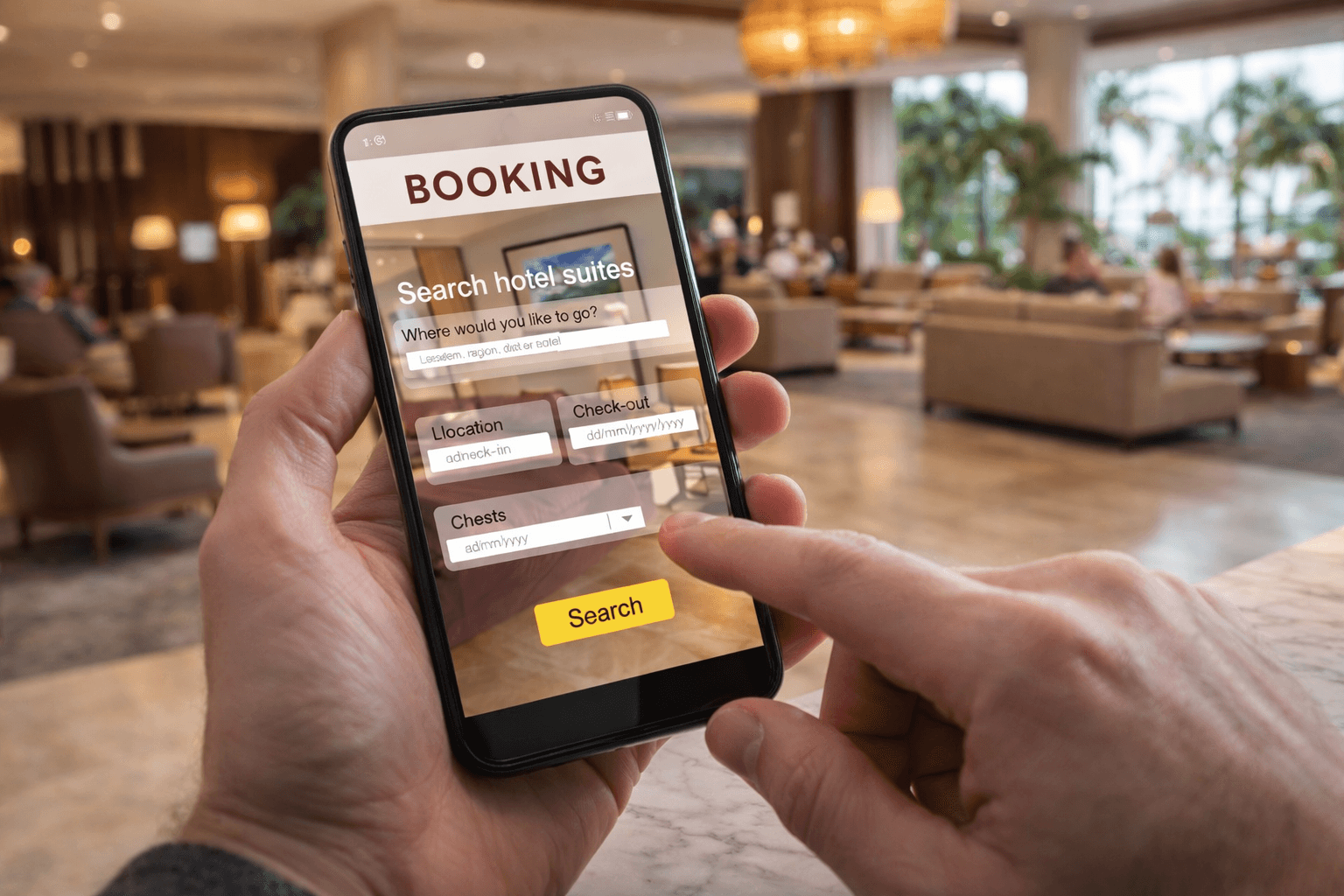
Messagerie IA pour les invités des hôtels : canaux, résultats et ce que les invités préfèrent réellement
La messagerie IA pour les invités révolutionne l'hôtellerie, avec 92 % des hôtels adoptant ou planifiant de mettre en œuvre cette technologie pour répondre aux attentes des invités en matière de réponses instantanées et multilingues sur leurs canaux préférés. Les solutions IA de Vertize, comme Lynn, s'intègrent parfaitement aux systèmes de gestion des propriétés pour offrir un service personnalisé 24/7, générant une augmentation de 35 % des conversions de réservations et une hausse de 25 % de la satisfaction des invités.
Messagerie IA pour les invités des hôtels : canaux, résultats et ce que les invités préfèrent réellement
La messagerie IA pour les invités est le cas d'utilisation d'intelligence artificielle qui connaît la croissance la plus rapide dans l'hôtellerie. Une étude de mars 2026 portant sur plus de 400 décideurs en technologie hôtelière a révélé que 92 % des hôtels ont adopté ou planifient activement d'adopter la messagerie assistée par IA, tandis que 45 % utilisent déjà des agents de webchat alimentés par l'IA. Ce changement est motivé par une réalité simple : les invités attendent désormais des réponses en quelques minutes, sur les canaux qu'ils utilisent quotidiennement, dans leur propre langue. Les hôtels qui répondent à cette attente constatent des gains mesurables en satisfaction, revenus et efficacité opérationnelle. Ceux qui ne le font pas perdent des invités au profit d'établissements qui le font.
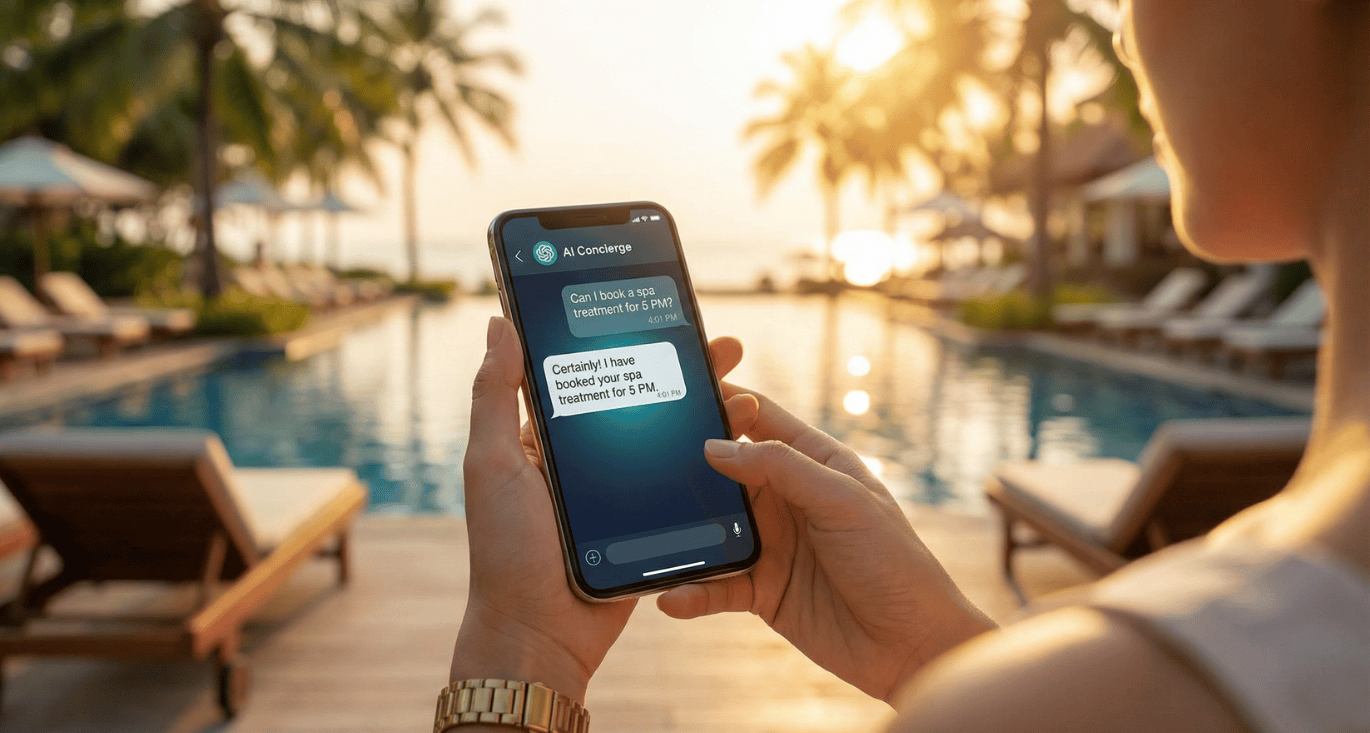
L'écart entre ce que les invités attendent et ce que la plupart des hôtels proposent n'a jamais été aussi grand. Jusqu'à 30 % des appels téléphoniques aux hôtels restent sans réponse ou sont mis en attente prolongée. Parallèlement, 61 % des invités s'attendent à une réponse à toute demande en cinq minutes ou moins. C'est une norme qu'aucune équipe de réception ne peut maintenir 24 heures sur 24 sans une couche automatisée gérant le volume de routine.
Ce guide détaille les canaux de messagerie qui fonctionnent réellement, les préférences des différents groupes démographiques d'invités, les résultats observés par les établissements et pourquoi la connexion entre votre plateforme de messagerie et votre système de gestion des propriétés détermine si vous offrez une véritable expérience de conciergerie ou simplement un autre chatbot.
Pourquoi la messagerie pour les invités est-elle le cas d'utilisation d'IA hôtelière qui connaît la croissance la plus rapide ?
La messagerie pour les invités est devenue le principal cas d'utilisation de l'IA dans l'hôtellerie car elle répond au point douloureux le plus urgent de l'industrie : la collision entre des attentes croissantes des invités et des pénuries persistantes de personnel. Avec 65 % des hôtels américains signalant encore des lacunes importantes en personnel dans les rôles opérationnels clés, l'automatisation n'est pas facultative. C'est structurel.
Les chiffres racontent l'histoire. Un rapport Canary Technologies de 2026 a révélé que 82 % des décideurs en technologie hôtelière s'attendent à une augmentation de l'utilisation de l'IA dans leur organisation au cours de l'année prochaine. Parmi les cas d'utilisation qui stimulent cette expansion, la communication avec les invités arrive en tête. Les hôtels indépendants adoptent également rapidement cette technologie, avec 74,5 % de ceux utilisant des outils d'IA signalant des résultats positifs et 16,7 % identifiant les communications automatisées avec les invités comme leur investissement IA le plus précieux.
Ce qui a changé depuis l'ère des chatbots de 2020 jusqu'à aujourd'hui est le passage de l'information à l'action. Les premiers chatbots pouvaient répondre aux FAQ de base. Les systèmes de messagerie IA d'aujourd'hui ne se contentent pas de répondre à une demande de départ tardif. Ils vérifient l'occupation dans le PMS, confirment la disponibilité, mettent à jour la réservation et envoient un message de confirmation à l'invité, le tout sans qu'un membre du personnel n'intervienne. C'est ce que l'industrie appelle l'« IA agentique », et c'est pourquoi l'adoption s'accélère si rapidement.
Le cas financier est tout aussi clair. Les hôtels déployant la messagerie IA signalent une augmentation de 35 % des taux de conversion des réservations pendant la phase pré-arrivée, une hausse de 25 % des scores de satisfaction des invités et des réductions de coûts de support allant jusqu'à 30 % grâce à l'automatisation des requêtes de routine. Pour les établissements déjà confrontés à des coûts de main-d'œuvre, ce ne sont pas des améliorations incrémentales. Ce sont des changements opérationnels.
Quels canaux de messagerie fonctionnent le mieux pour les hôtels ?
Le bon canal de messagerie dépend entièrement de l'origine de vos invités. Il n'existe pas de canal « meilleur » unique. Les hôtels obtenant le plus fort engagement sont ceux qui rencontrent les invités sur la plateforme qu'ils utilisent déjà quotidiennement, qu'il s'agisse de WhatsApp en Europe, de SMS aux États-Unis ou de WeChat en Chine.
WhatsApp est le canal dominant pour la communication internationale avec les invités, avec plus de 3 milliards d'utilisateurs actifs mensuels en 2025. En Europe, la pénétration parmi les utilisateurs d'internet dépasse 94 % dans la région DACH (Allemagne, Autriche, Suisse), avec plus de la moitié de la population de plus de 60 ans utilisant activement l'application. En Amérique latine, la domination est encore plus prononcée, le Brésil atteignant 98,9 % de pénétration. Pour les hôtels de ces régions, WhatsApp n'est pas un luxe. C'est l'interface de communication professionnelle principale pour presque toute la population.
Les métriques de performance reflètent cette portée. Les messages envoyés via l'API WhatsApp Business atteignent un taux d'ouverture de 98 % contre environ 20-25 % pour les e-mails traditionnels. Les taux de clics pour le contenu de vente incitative sur WhatsApp varient de 45 % à 60 %, ce qui en fait le canal direct vers les invités le plus efficace disponible aujourd'hui.
Le SMS reste la norme en Amérique du Nord pour les notifications pré-arrivée et les liens d'enregistrement numérique. Il est familier, fiable et ne nécessite pas que les invités téléchargent quoi que ce soit. Cependant, les coûts par message sont plus élevés que les alternatives basées sur les données, et le format limite les expériences multimédias riches.
WeChat est essentiel pour les voyageurs chinois, avec environ 1,2 milliard d'utilisateurs actifs mensuels. Tout établissement recevant un trafic entrant chinois significatif a besoin d'une intégration WeChat, non pas comme une option mais comme une attente de base.
Le webchat sur le site web de l'hôtel est le moteur de conversion pour la phase de pré-réservation. Les hôtels utilisant le webchat alimenté par l'IA signalent qu'environ un visiteur du site web sur quatre qui interagit avec le bot effectue une réservation. Ces bots sont particulièrement efficaces pour résoudre les questions « bloquantes », comme les politiques concernant les animaux, la disponibilité des bornes de recharge EV ou les horaires de la piscine, qui autrement entraînent l'abandon de réservation.
Les applications de messagerie comme Zalo, LINE, KakaoTalk et Telegram dominent sur des marchés spécifiques. Zalo est essentiel au Vietnam, LINE au Japon et en Thaïlande, KakaoTalk en Corée du Sud. Pour une plongée plus approfondie dans les stratégies de canaux régionaux, consultez notre guide sur servir chaque invité sur son canal préféré avec WhatsApp, Zalo et WeChat.
Région | Canal principal | Canal secondaire | Stat clé |
|---|---|---|---|
Europe (DACH) | Pénétration de plus de 94 % chez les utilisateurs d'internet | ||
Amérique latine | Instagram / Messenger | 98,9 % de pénétration (Brésil) | |
Amérique du Nord | SMS / Texte | Webchat / Messenger | Le SMS reste la norme pour les notifications |
Asie du Sud-Est | WhatsApp / LINE | Zalo / Messenger | Pénétration de plus de 90 % (Malaisie, Singapour) |
Chine | Téléphone | Environ 1,2 milliard d'utilisateurs actifs mensuels | |
Moyen-Orient | Téléphone | Pénétration de plus de 90 % (EAU, Koweït) | |
Corée du Sud | KakaoTalk | Plateforme locale dominante |
La conclusion opérationnelle est que les hôtels ont besoin d'une capacité omnicanal, pas d'une stratégie monocanal. Chaque canal doit alimenter un tableau de bord unifié afin que le personnel ait une visibilité complète quel que soit le canal choisi par l'invité.
Que préfèrent réellement les invités en matière de messagerie IA ?
Les préférences des invités pour la communication alimentée par l'IA se divisent radicalement selon les générations, et comprendre ce clivage fait la différence entre un déploiement technologique qui fonctionne et un qui frustre vos segments les plus précieux.
La génération Z et les Millennials considèrent la rapidité comme la principale mesure de la qualité du service. Les recherches montrent que 78 % des voyageurs de la génération Z préfèrent un concierge IA pour les besoins instantanés. Pour cette cohorte, un séjour sans friction signifie ne jamais avoir à décrocher un téléphone ou à faire la queue. Ils sont à l'aise pour gérer tout, du service en chambre aux séjours prolongés, entièrement via la messagerie, et ils s'attendent à des réponses en quelques secondes, pas en minutes.
Les baby-boomers racontent une histoire très différente. Seulement 23 % des baby-boomers trouvent confortable d'interagir avec un chatbot, beaucoup décrivant l'expérience comme impersonnelle ou déstabilisante. 71 % de cette génération préfèrent parler à une vraie personne, même pour des tâches de routine.
La nuance réside dans une étude de février 2026 qui traverse toutes les générations : 81 % des répondants ont identifié l'authenticité émotionnelle comme un défi critique pour l'IA dans l'hôtellerie. La conclusion n'est pas que les invités rejettent l'IA. C'est qu'ils veulent l'IA pour des choses spécifiques et des humains pour d'autres.
Les invités préfèrent systématiquement l'IA pour les tâches de routine et transactionnelles : demander des serviettes supplémentaires, demander les identifiants Wi-Fi, vérifier les horaires de la piscine ou demander un départ tardif. Ce sont des interactions à volume élevé et faible complexité qui bénéficient de réponses automatisées instantanées, 24/7.
Les invités préfèrent tout aussi systématiquement l'interaction humaine pour les situations émotionnellement nuancées : une recommandation de dîner d'anniversaire spécial, la résolution d'une plainte pour bruit, la gestion d'un litige de facturation ou la gestion d'un problème inattendu pendant leur séjour.
L'implication stratégique est claire. Utilisez l'IA pour filtrer et résoudre le volume de routine, libérant votre équipe humaine pour fournir le service haut de gamme qui génère la fidélité et les avis cinq étoiles. Les meilleures implémentations gèrent 80-90 % des messages entrants automatiquement tout en acheminant tout ce qui nécessite de l'empathie, du jugement ou de l'intelligence émotionnelle vers un membre du personnel avec le contexte complet de la conversation.
Il y a une couche supplémentaire : la langue. Plus de 60 % des voyageurs internationaux rencontrent des barrières linguistiques pendant leurs séjours, et 76 % préfèrent effectuer des achats dans leur langue maternelle. L'IA qui communique couramment dans la langue maternelle d'un invité peut en fait augmenter la satisfaction au-delà de ce qu'un agent humain monolingue peut offrir, surtout lorsque l'alternative est un anglais approximatif ou une application de traduction. Cela est particulièrement pertinent en Asie, au Moyen-Orient et en Europe du Sud, où la maîtrise de l'anglais parmi les invités d'hôtel varie largement.
Quels résultats les hôtels obtiennent-ils de la messagerie IA ?
Les données de ROI pour la messagerie IA pour les invités ne sont plus théoriques. Les établissements de tous segments, des hôtels-boutiques aux chaînes d'entreprise, signalent des améliorations constantes dans quatre catégories : revenus, efficacité, satisfaction et vitesse de réponse.
Revenus et conversion. La messagerie IA stimule les réservations directes et les revenus annexes en fournissant des réponses instantanées pendant la fenêtre de prise de décision. Les hôtels utilisant la messagerie alimentée par l'IA pendant la phase de pré-réservation signalent une augmentation de 35 % des taux de conversion des réservations. Les offres de vente incitative personnalisées diffusées via les canaux de messagerie, comme les surclassements de chambre ou les forfaits spa envoyés 24 heures avant l'arrivée, atteignent des taux de conversion allant jusqu'à 45 % contre 12 % pour les campagnes e-mail traditionnelles. Les hôtels exploitant l'IA tout au long du parcours de l'invité signalent une augmentation de 17 % du revenu total par rapport à ceux qui s'appuient sur des méthodes traditionnelles.
Efficacité opérationnelle. Les plateformes de messagerie IA ont réduit les temps de réponse d'une moyenne de 30 minutes avec des équipes uniquement humaines à moins de 18 secondes. Les équipes utilisant la messagerie augmentée par l'IA signalent un gain de 45 minutes ou plus de temps administratif par membre du personnel et par jour, principalement en éliminant la gestion des demandes répétitives. Les agents vocaux IA gèrent jusqu'à 80 % des demandes téléphoniques de routine, récupérant plus de 20 heures de temps de planification et de coordination hebdomadaire.
Satisfaction des invités. La corrélation vitesse-satisfaction est directe et mesurable. Les établissements utilisant des assistants de messagerie IA signalent une hausse de 25 % des scores de satisfaction des invités. À grande échelle, les résultats se maintiennent : Hilton a signalé une augmentation de 20 % de la satisfaction parmi les invités utilisant leurs fonctionnalités Connected Room, tandis qu'Accor a constaté une augmentation de 32 % de la satisfaction dans les chambres avec interfaces de service contrôlées par la voix.
Taux d'automatisation. C'est là que la différence entre les anciens chatbots et l'IA moderne devient frappante. Les principales plateformes d'IA générative signalent des taux d'automatisation moyens de 66 % pour les demandes des invités, avec des déploiements optimisés atteignant 96 %. Les anciens chatbots basés sur des règles plafonnent généralement autour de 30 % d'automatisation avant que les invités n'aboutissent à des impasses et ne reviennent aux appels téléphoniques.
Métrique | Amélioration | Contexte |
|---|---|---|
Conversion des réservations | +35 % | Influence du chatbot IA pendant la pré-réservation |
Réservations directes | +30 % | Bots de réservation directe |
Satisfaction des invités (CSAT) | +25 % | Avantage de la réponse instantanée |
Revenu par établissement | +17 % | IA vs. méthodes traditionnelles |
Temps administratif récupéré | 45+ min/jour | Par membre du personnel |
Temps de réponse | 30 min à 18 sec | Moyenne humaine vs. IA |
Réduction des coûts de support | -30 % | Automatisation des requêtes de routine |
En quoi la messagerie IA diffère-t-elle d'un chatbot hôtelier traditionnel ?
L'écart entre un chatbot basé sur des règles et un agent de messagerie IA générative n'est pas incrémental. C'est une expérience invité fondamentalement différente, et comprendre cette distinction compte lors de l'évaluation des plateformes.
Les chatbots basés sur des règles fonctionnent sur des arbres de décision et la correspondance de mots-clés. Ils suivent des scripts prédéfinis : si un invité tape « piscine », le bot renvoie les horaires de la piscine. Mais si l'invité demande « mes enfants peuvent-ils nager après le dîner ? », le bot ne peut souvent pas analyser l'intention. Ces systèmes automatisent généralement environ 30 % des demandes avant que les invités n'aboutissent à des impasses, et la frustration de « bouclage » qui en résulte, où le bot continue de demander à l'invité de reformuler, rend souvent l'expérience pire que pas de bot du tout.
Les agents IA génératifs comprennent l'intention, le contexte et le sentiment. Ils traitent le langage naturel comme le ferait un humain, reconnaissant que « ma chambre est glaciale » est une plainte sur la température, pas une demande de glace. Ils gèrent des conversations à plusieurs tours où la deuxième question dépend de la première. Et surtout, les systèmes agentiques modernes ne se contentent pas de répondre aux questions. Ils exécutent des tâches : enregistrer un invité, traiter un surclassement via le PMS, mettre à jour une réservation ou acheminer une demande de maintenance.
Les taux de résolution reflètent cette différence. Les plateformes de messagerie IA générative signalent des taux de résolution de 95,5 %, contre environ 30 % pour les systèmes basés sur des règles. Les retours négatifs diminuent de jusqu'à 16 % lorsque les établissements passent des anciens chatbots à la messagerie alimentée par l'IA.
Le modèle le plus efficace en 2026 est hybride : l'IA gère 80-90 % du volume, mais lorsqu'elle détecte de la frustration, une complexité émotionnelle ou un drapeau VIP dans le PMS, elle déclenche un transfert transparent vers un agent humain. Le membre du personnel entre dans la conversation avec l'historique complet visible, afin que l'invité n'ait jamais à se répéter.
Pour une comparaison détaillée entre les concierges IA et les chatbots traditionnels, consultez notre article sur ce qui rend un concierge IA différent d'un chatbot traditionnel.
Pourquoi l'intégration PMS fait-elle ou défait-elle la messagerie IA hôtelière ?
Le plus grand différenciateur entre les plateformes de messagerie qui apportent une réelle valeur et celles qui frustrent les invités est l'intégration avec le système de gestion des propriétés. Un outil de messagerie autonome qui ne peut pas accéder aux données de réservation, au statut des chambres ou à l'historique des invités est un silo. Un système intégré est un cerveau opérationnel.
Lorsqu'une plateforme de messagerie IA a un accès PMS en temps réel, la qualité de chaque interaction change fondamentalement.
La personnalisation devient automatique. Au lieu d'un message de bienvenue générique, l'IA peut accueillir un invité de retour par son nom, référencer sa préférence de chambre d'un séjour précédent et proposer proactivement son type de chambre préféré. Ce niveau de reconnaissance est ce que 86 % des invités disent apprécier, et c'est seulement possible lorsque la couche de messagerie lit le PMS en temps réel.
L'exécution des tâches devient instantanée. Lorsqu'un invité demande un départ tardif via WhatsApp, une IA intégrée vérifie le PMS pour l'occupation du lendemain et le planning de ménage de la chambre spécifique. Elle accorde ou refuse la demande en fonction de la disponibilité réelle, met à jour le PMS et confirme avec l'invité, le tout en quelques secondes, sans qu'un membre du personnel ne soit impliqué.
La saisie de données diminue considérablement. Les établissements avec des systèmes de messagerie et PMS entièrement intégrés signalent une réduction allant jusqu'à 70 % de la saisie manuelle de données. Le personnel passe du temps avec les invités au lieu des feuilles de calcul.
Le défi est que l'intégration reste un obstacle. Environ 62 % des grandes chaînes hôtelières citent un manque d'expertise technique comme un frein au déploiement de l'IA, et 45 % luttent spécifiquement pour connecter l'IA aux piles technologiques existantes. Mais la récompense est significative : les établissements qui parviennent à une connectivité complète signalent une augmentation de 30 % de l'efficacité opérationnelle et une réduction de 50 % du temps de formation du personnel.
C'est exactement pourquoi la couche IA que votre PMS manque compte tant. Votre PMS gère les réservations, la facturation et l'inventaire des chambres. Mais il n'a jamais été conçu pour converser avec les invités via WhatsApp, la voix, le webchat et une douzaine d'autres canaux dans plus de 50 langues. Cela nécessite une couche d'intelligence IA dédiée qui se superpose à votre PMS, lit ses données en temps réel et agit au nom de l'invité.
Vertize (Lynn) est construite spécifiquement pour cette architecture. Lynn se connecte à tous les principaux systèmes de gestion des propriétés, y compris Oracle OPERA Cloud, Mews, Cloudbeds, Apaleo, Protel, RoomRaccoon et plus de 40 autres, via leurs API ouvertes. Elle opère sur tous les canaux utilisés par les invités, de WhatsApp et WeChat aux appels vocaux et tablettes en chambre, dans plus de 50 langues avec détection automatique de la langue. Parce que Lynn lit les données PMS en temps réel, elle ne se contente pas de répondre aux questions. Elle vérifie la disponibilité, traite les ventes incitatives, met à jour les réservations et offre le type de service personnalisé et instantané que les invités attendent de plus en plus, 24 heures sur 24, sans ajouter de personnel.
Pour les hôtels évaluant les plateformes de messagerie IA, la première question ne devrait pas être « quels canaux prend-elle en charge ? » Elle devrait être « dans quelle mesure s'intègre-t-elle à notre PMS ? » La liste des canaux est la base. La connexion PMS est ce qui détermine si vous offrez une véritable conciergerie ou simplement un chatbot avec une interface plus agréable.
Foire aux questions
Qu'est-ce que la messagerie IA pour les invités des hôtels ?
La messagerie IA pour les invités utilise l'intelligence artificielle pour gérer les communications avec les invités sur des canaux comme WhatsApp, SMS, webchat et voix. Contrairement aux chatbots basiques, les plateformes modernes de messagerie IA comprennent le langage naturel, exécutent des tâches via des intégrations PMS et fonctionnent 24/7 dans des dizaines de langues sans intervention humaine pour les demandes de routine.
Quel canal de messagerie est le plus efficace pour les hôtels ?
Cela dépend de la démographie de vos invités. WhatsApp domine en Europe, en Amérique latine et au Moyen-Orient avec un taux d'ouverture de 98 %. Le SMS reste la norme en Amérique du Nord. WeChat est essentiel pour les voyageurs chinois. L'approche la plus efficace est omnicanal : rencontrer chaque invité sur sa plateforme préférée via un système unifié.
Dans quelle mesure la messagerie IA peut-elle améliorer les revenus d'un hôtel ?
Les hôtels utilisant la messagerie alimentée par l'IA signalent une augmentation de 35 % des taux de conversion des réservations et des taux de conversion allant jusqu'à 45 % sur les offres de vente incitative personnalisées diffusées via des canaux comme WhatsApp. Globalement, les établissements exploitant l'IA tout au long du parcours de l'invité constatent une augmentation de 17 % des revenus par rapport aux méthodes traditionnelles.
Les invités préfèrent-ils la communication IA ou humaine ?
Cela dépend de la tâche. Les invités de toutes générations préfèrent l'IA pour les demandes de routine et transactionnelles comme les mots de passe Wi-Fi, les serviettes supplémentaires ou les demandes de départ tardif. Pour les situations émotionnellement complexes comme les plaintes ou la planification d'occasions spéciales, 81 % des invités identifient l'authenticité émotionnelle comme critique, favorisant l'interaction humaine.
Quels taux d'automatisation les hôtels peuvent-ils attendre de la messagerie IA ?
Les plateformes modernes d'IA générative signalent des taux d'automatisation moyens de 66 % pour les demandes des invités, avec des déploiements optimisés atteignant jusqu'à 96 %. C'est significativement plus élevé que les anciens chatbots basés sur des règles, qui plafonnent généralement autour de 30 % avant que les invités ne rencontrent des impasses.
Comment la messagerie IA pour les invités s'intègre-t-elle à un PMS hôtelier ?
Les plateformes de messagerie IA se connectent aux systèmes de gestion des propriétés via des API ouvertes, obtenant un accès en temps réel aux données de réservation, au statut des chambres, aux profils des invités et aux tarifs. Cette intégration permet à l'IA d'exécuter des tâches comme confirmer les départs tardifs, traiter les surclassements et personnaliser les messages de bienvenue en fonction de l'historique des invités, le tout sans intervention manuelle du personnel.
La messagerie IA pour les invités convient-elle aux petits hôtels ou indépendants ?
Oui. Les hôtels indépendants adoptent la messagerie IA à un rythme rapide, avec 74,5 % signalant un ROI positif. Pour les petits établissements sans grandes équipes de réception, la messagerie IA est particulièrement précieuse car elle fournit une couverture multilingue 24/7 qui serait impossible à assurer manuellement.
Related posts
Comment les hôtels utilisent réellement l'IA en 2026 (et ce qui génère de vrais résultats)
En 2026, l'IA est devenue l'épine dorsale de l'hôtellerie, améliorant de manière transparente les expériences des clien…
Appels et ventes incitatives pré-arrivée par IA : comment les hôtels ajoutent 15-25 % de revenus avant l'arrivée des clients
Découvrez comment les hôtels augmentent leurs revenus de 15-25 % avant même l'arrivée des clients, grâce aux appels et…
Attentes générationnelles des clients et IA : ce que Gen Z, Millennials et Boomers veulent vraiment
Découvrez comment les différences générationnelles façonnent les attentes des clients en matière d'IA dans l'hôtellerie…
Prêt à Transformer Votre Hôtel ?
Réservez un appel stratégique gratuit et découvrez précisément comment Lynn fonctionnerait dans votre établissement.