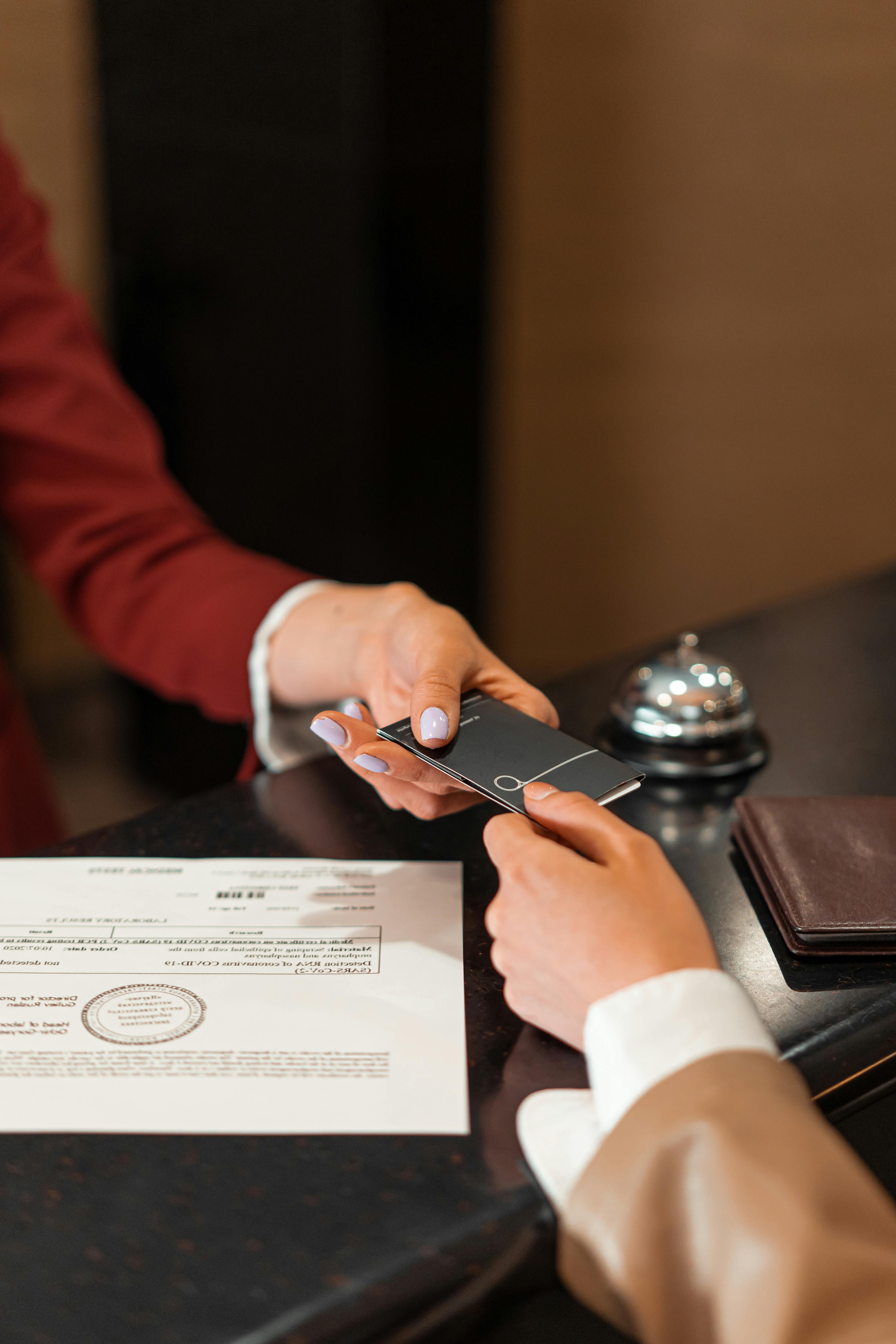
AI concierge for hotels: what it is, how it works, and why it matters in 2026
In 2026, an AI concierge for hotels is no longer a luxury but a necessity, seamlessly handling guest interactions across chat, voice, and messaging with real-time data from property management systems. Vertize's intelligent solutions, like Lynn, empower hotels to meet rising guest expectations, turning routine inquiries into personalized experiences that drive satisfaction and revenue.
AI concierge for hotels: what it is, how it works, and why it matters in 2026
An AI concierge for hotels is an intelligent guest-facing system that handles conversations, answers questions, makes recommendations, and completes tasks across chat, voice, and messaging channels, all while pulling real-time data from the hotel's property management system. Unlike basic chatbots that follow rigid scripts, an AI concierge understands context, remembers guest preferences, communicates in dozens of languages, and operates around the clock. For hotels dealing with staff shortages and rising guest expectations, this technology is quickly becoming the line between a forgettable stay and a remarkable one.
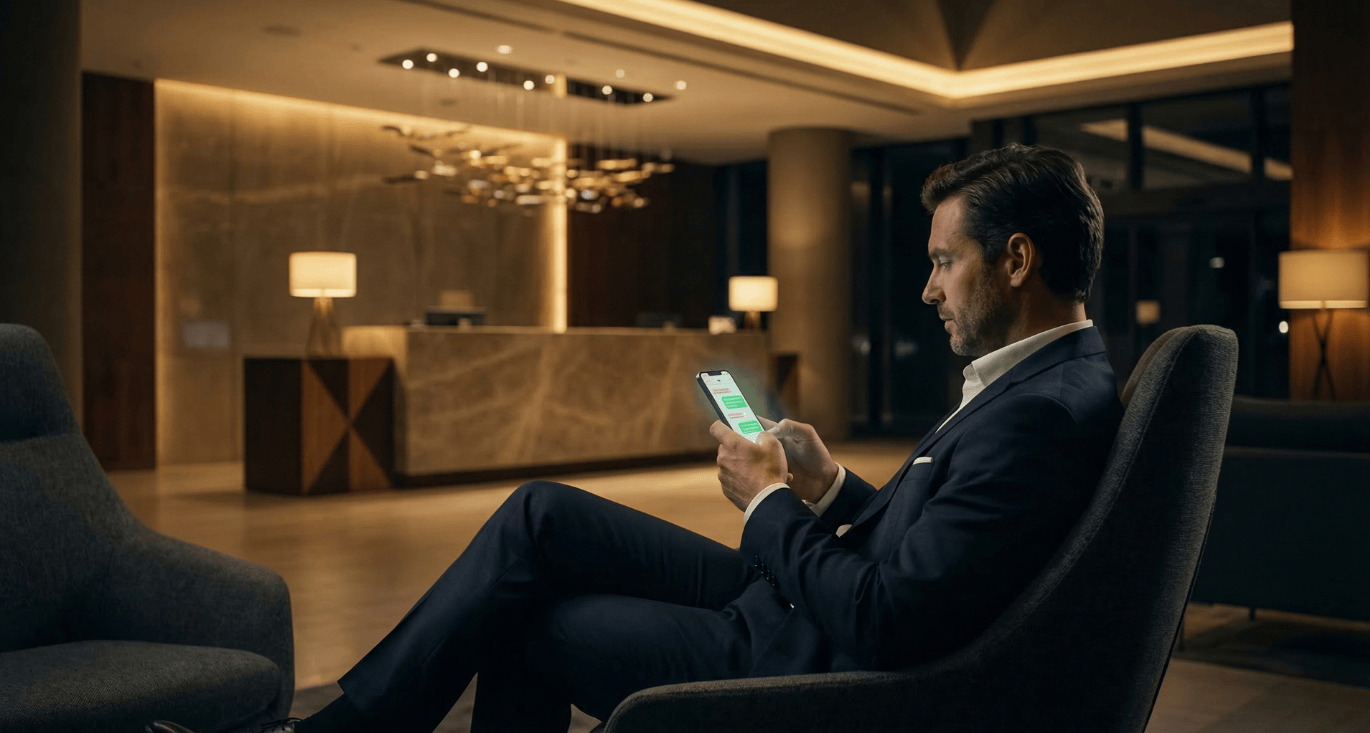
If you run a hotel in 2026, you have probably heard the term "AI concierge" thrown around at trade shows, in vendor pitches, and across industry publications. But the definitions vary wildly. Some vendors rebrand a basic FAQ chatbot as an AI concierge. Others use it to describe a voice assistant that answers phone calls. A few use it as a catch-all for any AI tool that touches guest communication.
This guide cuts through the noise. It covers exactly what an AI concierge is, how the technology actually works under the hood, where it differs from traditional chatbots, what kind of results hotels are seeing, and what to look for when evaluating solutions. Whether you manage a boutique property or a multi-site portfolio, this is the foundation you need before making any AI investment decision.
What is an AI concierge for hotels?
An AI concierge is a guest-facing intelligence layer that uses natural language processing and large language models to hold real conversations with hotel guests across multiple channels. It connects to the hotel's property management system (PMS) and other operational tools to access reservation data, room details, local recommendations, and service availability in real time.
Think of it as the digital equivalent of a knowledgeable, multilingual concierge who is always available and never has a bad day. But instead of sitting behind a lobby desk, it lives on WhatsApp, your hotel website, the guest's phone, and increasingly on voice channels where it answers incoming calls.
The key distinction is intelligence. A traditional chatbot follows a decision tree: if a guest types "pool hours," it returns a pre-written answer. An AI concierge understands the intent behind a question, even when phrased in unexpected ways. A guest who messages "can my kids swim after dinner?" gets an answer that accounts for pool closing times, the child pool policy, and the dinner service schedule, all pulled from the hotel's own data.
This matters because guest expectations have shifted dramatically. According to a 2025 Hotel Guest Tech Report, 58% of hotel guests believe AI can improve their stay, and 70% find AI-powered tools helpful for simple requests like checking Wi-Fi passwords or ordering room service. The demand is there. The question for hoteliers is whether they meet it with a basic scripted tool or an intelligent system that actually understands and serves the guest.
Major hotel brands are moving fast. Hilton launched its AI Planner in March 2026, a generative AI concierge that helps guests explore properties and plan stays through conversational language. IHG partnered with Google Cloud for its AI travel planner. Marriott's Renaissance Hotels rolled out AI tools across its websites. These moves signal that AI-powered guest interaction is no longer experimental. It is becoming the expected standard.
For independent hotels and smaller groups, this creates both a challenge and an opportunity. You do not need to build an AI concierge from scratch. Dedicated solutions like Vertize's Lynn connect to your existing PMS and go live across guest-facing channels without requiring a technology team to build or maintain.
How does an AI concierge actually work?
An AI concierge works by combining a large language model (the "brain" that understands and generates natural language) with a real-time integration layer that connects to the hotel's operational systems. When a guest sends a message or makes a call, the system processes the request through several steps in milliseconds.
Here is how the flow works in practice:
Step 1: The guest reaches out. This can happen on any channel the hotel supports. WhatsApp, webchat, SMS, email, Facebook Messenger, or a phone call. The AI concierge receives the incoming message or transcribes the voice input.
Step 2: The system understands intent. Using natural language processing, the AI identifies what the guest is actually asking for. "Is the gym open early?" and "can I work out before breakfast?" trigger the same response, even though the phrasing is completely different. The system also detects the guest's language and responds accordingly, without the guest needing to select a language preference.
Step 3: It pulls live data from the PMS and other systems. This is what separates an AI concierge from a generic chatbot. The system queries the property management system for the guest's reservation details, room type, check-in date, and any special requests. It can also pull from the channel manager, restaurant booking system, spa software, or local activity databases.
Step 4: It generates a contextual response. Rather than returning a canned answer, the AI assembles a response that accounts for the specific guest, their stay details, and the current operational reality. A guest checking in tomorrow gets different information than one checking out today.
Step 5: It takes action when appropriate. Advanced AI concierges do not just answer questions. They can process room service orders, book spa appointments, request late checkouts, flag maintenance issues for staff, and push upsell offers at the right moment in the guest journey. Each action syncs back to the hotel's systems.
Step 6: It learns and improves. Every interaction trains the system. When a guest asks a question the AI cannot handle and a staff member steps in, that resolution becomes training data. Over time, the AI handles a larger share of interactions independently while staff focus on complex, high-value guest moments.
The underlying technology has advanced rapidly. In 2026, the most effective AI concierge systems use retrieval-augmented generation (RAG), a technique that grounds the AI's responses in the hotel's actual data rather than letting the language model generate potentially inaccurate information. This is critical in hospitality, where a wrong answer about an allergy menu or a pool closure time is not just unhelpful but potentially harmful.
What is the difference between an AI concierge and a hotel chatbot?
An AI concierge and a traditional hotel chatbot solve the same surface-level problem (answering guest questions), but they differ fundamentally in how they understand language, access data, and handle complex requests. The distinction matters because choosing the wrong tool leads to frustrated guests and wasted investment.
Here is how the two compare across the capabilities that matter most to hotel operations:
Capability | Traditional hotel chatbot | AI concierge |
|---|---|---|
Language understanding | Keyword matching and decision trees | Natural language processing with context awareness |
Response type | Pre-written, static answers | Dynamically generated, personalized responses |
PMS integration | Limited or none | Deep, real-time two-way data exchange |
Multilingual support | Typically 5 to 10 languages via translation | 50+ languages with native fluency |
Channel coverage | Usually webchat only | Chat, voice, WhatsApp, SMS, email, social media |
Guest personalization | Generic (same answer for every guest) | Context-aware (adapts to reservation, preferences, history) |
Task execution | Answers questions only | Answers questions, processes requests, triggers workflows |
Learning capability | Static (manual updates needed) | Continuous learning from every interaction |
Handover to staff | Abrupt or non-existent | Seamless with full conversation context preserved |
Upselling ability | Basic pop-ups or prompts | Context-aware, timed offers based on guest profile and journey stage |
A rule-based chatbot works fine for the simplest tier of guest questions: "What time is breakfast?" or "What is the Wi-Fi password?" But the moment a guest asks something outside the script, the experience breaks down. "Can you recommend a good restaurant near the hotel that's kid-friendly and open late?" is beyond what a scripted system can handle.
An AI concierge handles these nuanced requests because it understands intent and context simultaneously. It knows the guest is traveling with children (from the reservation data), that it is 9 PM (time-aware), and that "near the hotel" means within walking distance (location-aware). The response feels helpful and personal rather than robotic and frustrating.
This shift from scripted to intelligent is why industry analysts increasingly separate the categories. PhocusWire's 2026 AI trends report noted that hoteliers have reached a breaking point with vendors who slap "AI-powered" labels on existing tools without meaningful technical change. The distinction between a true AI concierge and a rebranded chatbot is not marketing semantics. It is the difference between a tool guests actually use and one they abandon after one interaction.
What can an AI concierge do for hotel guests?
An AI concierge supports guests across the entire stay journey, from the moment they book to well after checkout. The most effective implementations cover pre-stay, in-stay, and post-stay touchpoints, creating a continuous thread of personalized communication.
Pre-arrival
The guest relationship starts before they walk through the door. An AI concierge can send a personalized welcome message via WhatsApp or SMS days before arrival, confirm reservation details, offer early check-in or room upgrades, and answer pre-trip questions about parking, directions, or local transport. This is also the highest-converting window for upselling. Guests are excited about their upcoming trip and receptive to add-ons like breakfast packages, airport transfers, or spa bookings.
Hotels that use AI-driven pre-arrival messaging report that context-aware offers convert significantly better than generic blast emails. When the AI knows a returning guest booked the spa last visit, it can proactively offer a spa package rather than a generic room upgrade. That kind of precision is impossible at scale without automation.
During the stay
This is where the AI concierge earns its value every hour. Common in-stay interactions include:
Answering questions about hotel facilities, hours, and policies
Processing room service orders and special requests
Recommending restaurants, activities, and local experiences
Handling maintenance or housekeeping requests and routing them to the right staff
Managing late checkout requests
Providing real-time information about events, weather, or transport
Communicating in the guest's native language without staff needing to be multilingual
The around-the-clock availability is particularly impactful. Hotels consistently miss calls and messages during peak check-in windows, early mornings, and late evenings. Every unanswered question is either a missed revenue opportunity or a negative guest experience. An AI concierge eliminates that gap entirely. A guest can ask about breakfast options at 5 AM or request extra towels at midnight and get an immediate, accurate response.
Post-stay
After checkout, the AI concierge can send a personalized thank-you message, request feedback, and share a direct booking link for the guest's next stay. Hotels using AI for post-stay follow-up see measurable improvements in review generation and repeat booking rates. Personalized travel offers powered by AI have been linked to repeat booking increases of up to 25%, according to hospitality industry analyses.
What results are hotels seeing with AI concierges?
Hotels deploying AI concierges report measurable improvements across revenue, operational efficiency, and guest satisfaction. The results are strongest when the AI is deeply integrated with the PMS and deployed across multiple guest-facing channels.
Revenue impact
Direct bookings are the clearest win. Hotels using AI-powered guest communication platforms report an average 35% increase in direct bookings, largely driven by the AI's ability to guide website visitors through the reservation process in real time. That same real-time guidance helps reduce OTA dependency, which directly improves margins on every booking.
Upselling is the second revenue lever. AI concierges that understand a guest's profile, stay dates, and preferences can offer contextually relevant upgrades and add-ons at the right moment. The difference between a generic pop-up and a personalized WhatsApp message offering a late checkout because the AI knows your flight leaves at 9 PM is the difference between a 2% conversion rate and a significantly higher one.
Operational efficiency
Staff workload reduction is immediate and significant. The majority of questions hotel service teams handle are routine: Wi-Fi passwords, pool hours, checkout times, restaurant reservations, parking info. According to the 2025 Hotel Guest Tech Report, 70% of guests find AI tools helpful for exactly these types of simple requests. By redirecting that volume to an AI concierge, front desk and concierge staff reclaim time for the interactions that actually require a human touch.
Hotels that have deployed AI concierge solutions report that front desk inquiry volumes drop by up to 40%, and response times improve from minutes (or hours, during peak periods) to seconds. This is not about replacing staff. It is about freeing them from repetitive tasks so they can focus on the guest moments that build loyalty and generate reviews.
Guest satisfaction
Faster response times and 24/7 availability directly correlate with higher satisfaction scores. When guests get an accurate answer in seconds rather than waiting in a phone queue or walking to the front desk, their perception of service quality improves, even though they interacted with a machine.
The nuance is important: guests want AI for speed and convenience on routine requests, but they still prefer human interaction for emotionally complex situations. The best AI concierge implementations recognize this boundary and hand off seamlessly to staff when the conversation requires empathy, negotiation, or creative problem-solving.
Why does PMS integration matter for an AI concierge?
PMS integration is the single most important technical factor that determines whether an AI concierge delivers real value or just serves as a glorified FAQ page. Without live access to the property management system, the AI operates in a vacuum, unable to personalize responses or take meaningful action on behalf of the guest.
Here is what PMS integration enables that standalone AI tools cannot do:
Personalized responses based on reservation data. When the AI knows a guest is checking in tomorrow for a three-night stay in a suite, it can tailor every interaction accordingly. "Your room will be ready from 3 PM. Would you like us to arrange an airport transfer?" is fundamentally different from a generic "Check-in starts at 3 PM."
Real-time availability and pricing. A PMS-connected AI concierge can answer "Do you have a room available for tonight?" with an accurate yes-or-no and a current rate. A disconnected system can only say "Please call the front desk" or, worse, provide outdated information.
Two-way operational sync. When a guest requests a late checkout through the AI, that request should flow directly into the PMS for staff to approve or confirm, without anyone needing to manually re-enter data. The same applies to room service orders, housekeeping requests, and maintenance flags. Without this sync, every AI interaction creates manual follow-up work that defeats the purpose of automation.
Guest history and preference memory. For returning guests, a PMS-connected AI concierge can reference past stays, preferences, and special requests. "Welcome back. Would you like the same room type as your last visit?" creates a loyalty moment that no disconnected system can replicate.
This is where most PMS platforms have a significant gap. The major systems (Oracle OPERA Cloud, Mews, Cloudbeds, Stayntouch, Infor HMS) excel at operational management: reservations, billing, room assignments, reporting. But their native guest-facing AI capabilities are limited. They were designed as systems of record, not as conversational guest engagement platforms.
That gap is exactly where a dedicated AI intelligence layer adds value. A solution like Vertize's Lynn connects to the PMS through its open API, reads and writes guest data in real time, and provides the conversational AI layer that the PMS itself does not offer. The PMS remains the operational backbone. The AI concierge becomes the guest-facing brain.
What should hotels look for in an AI concierge solution?
Choosing the right AI concierge requires evaluating specific capabilities that directly impact guest experience and operational ROI. Not every solution claiming to be an AI concierge delivers the same depth of intelligence, integration, or channel coverage.
Here are the evaluation criteria that matter most:
Deep PMS integration. Ask how the system connects to your property management system. Does it read and write data in real time? Does it support your specific PMS (Oracle OPERA, Mews, Cloudbeds, or others)? A surface-level integration that only pulls basic reservation info will limit what the AI can actually do for your guests.
True multilingual capability. For hotels serving international guests, multilingual support is non-negotiable. But there is a difference between running responses through a generic translation layer and delivering native-quality conversations in 50+ languages. Ask for a demo in a language your guests commonly speak and evaluate whether the responses feel natural.
Omnichannel deployment. Your guests do not all communicate the same way. Some prefer WhatsApp. Others use webchat. Many still call the hotel directly. An AI concierge should work across all the channels your guests use, with conversation context preserved if a guest switches from one channel to another.
Proactive guest engagement. The best AI concierges do not wait for the guest to ask. They initiate contact at key moments in the guest journey: pre-arrival information, check-in guidance, in-stay upsell offers, and post-stay follow-up. Evaluate whether the solution supports automated, trigger-based messaging.
Seamless human handover. No AI handles 100% of guest interactions. When the conversation exceeds what the AI can manage (complaints, special requests, emotionally sensitive situations), the handover to a human agent must be smooth. The staff member should see the full conversation history and context, not start from scratch.
Upselling and revenue capabilities. An AI concierge that only answers questions leaves money on the table. Look for solutions that actively drive revenue through personalized upsell offers, direct booking assistance, and contextual recommendations timed to the guest's journey.
Analytics and reporting. You need visibility into what guests are asking, which questions the AI resolves independently, where it hands off to staff, and how interactions correlate with revenue. Without reporting, you are flying blind.
Data security and compliance. Guest data is sensitive. Confirm the solution meets GDPR requirements (critical for European properties), uses encryption, and clearly defines data ownership.
Is an AI concierge right for your hotel?
An AI concierge is not a one-size-fits-all solution, but the range of hotels that benefit from one is wider than most operators assume. The technology is no longer reserved for large chains with dedicated IT teams.
An AI concierge makes the most sense when:
Your front desk handles a high volume of repetitive guest questions that consume staff time
You serve international guests who speak multiple languages
You miss calls or messages during peak periods, evenings, or overnight
You want to increase upsell revenue but lack the staff capacity to offer personalized recommendations at scale
Your current guest communication is reactive (you respond when guests ask) rather than proactive (you reach out at the right moment)
You want to reduce OTA dependency by converting more direct bookings through real-time chat assistance
It may not be the right priority if:
Your hotel has very few rooms and an intimate, high-touch service model where every guest interacts directly with the owner or a dedicated concierge
Your PMS does not offer an open API or any integration capability (though increasingly rare, some legacy systems still lack this)
You have not addressed fundamental data quality issues in your PMS (an AI concierge is only as good as the data it can access)
For most hotels operating in 2026, the question is not whether to deploy an AI concierge, but when and which solution fits their property. The technology has matured beyond the experimental phase. Guests expect it, competitors are adopting it, and the operational and revenue benefits are well documented.
If you are exploring options, start by evaluating how well your current PMS supports AI integration. That integration capability is the foundation everything else depends on.
Frequently asked questions
What is an AI concierge for hotels?
An AI concierge for hotels is an intelligent digital assistant that uses natural language processing and PMS integration to handle guest conversations, answer questions, process requests, and deliver personalized recommendations across chat, voice, and messaging channels around the clock.
How is an AI concierge different from a hotel chatbot?
A traditional chatbot follows scripted decision trees and returns pre-written answers. An AI concierge understands natural language, generates contextual responses, integrates with hotel systems for real-time data, supports dozens of languages, and can take action (booking, upselling, routing requests) rather than just answering questions.
Does an AI concierge replace hotel staff?
No. An AI concierge handles routine, repetitive guest interactions so that staff can focus on complex requests and high-value guest moments. The best implementations combine AI speed and availability with human empathy and problem-solving for situations that require a personal touch.
What channels does an AI concierge work on?
Modern AI concierges operate across WhatsApp, webchat, SMS, email, Facebook Messenger, and voice (phone calls). The most effective solutions maintain conversation context when a guest switches between channels.
How much does an AI concierge cost?
Pricing varies by provider, property size, and channel coverage. Subscription models for small to mid-size hotels typically range from $200 to $600 per month. The key metric is ROI: compare the subscription cost against the revenue generated from upsells, direct bookings, and staff time saved.
How long does it take to set up an AI concierge?
Setup timelines vary by solution. Some AI concierge platforms can go live within days if they have pre-built PMS connectors. More complex implementations involving custom integrations and multi-property deployments may take several weeks. Ask vendors about their typical onboarding timeline for your PMS.
Can an AI concierge speak multiple languages?
Yes. Leading AI concierge solutions support 50 or more languages with native-quality responses, not just machine translation. This is particularly valuable for hotels serving international guests who expect to communicate in their own language.
Related posts

What is an AI-native PMS in 2026? (And why most hotels still need an AI layer on top)
In 2026, an AI-native Property Management System (PMS) is defined by machine learning embedded at its core, revolutioni…
Best AI concierge for your hotel: the 2026 buyer's guide
Discover the ultimate AI concierge for your hotel with Vertize's 2026 buyer's guide, designed to help you navigate the…
Hotel automation in 2026: what actually works, what doesn't, and where AI changes everything
In 2026, hotel automation has evolved into three distinct levels—rule-based task automation, predictive machine learnin…
Ready to Transform Your Hotel?
Book a free strategy call and see exactly how Lynn would work in your property.