Stayntouch PMS and AI: what's built in, what's missing, and how to extend it
Discover how Stayntouch PMS leverages AI with its Guest Messaging tool and roverIQ Ava voice assistant to streamline hotel operations, while identifying key guest-facing gaps in cross-channel context and multilingual reasoning. Learn how Vertize’s dedicated AI intelligence layer integrates seamlessly via Stayntouch’s open API to deliver a unified, multilingual concierge experience that enhances guest satisfaction and boosts revenue.
Stayntouch PMS and AI: what's built in, what's missing, and how to extend it
TL;DR: Stayntouch is a strong mobile-first PMS with a 97% client retention rate, a recently launched AI-powered Guest Messaging tool, and a voice assistant integration through roverIQ Ava. These native features solve specific operational problems well, but they operate as separate systems without shared context. A dedicated AI intelligence layer unifies text, voice, and visual channels into one multilingual concierge that uses your Stayntouch data in real time.

If you run a hotel on Stayntouch, you already know the platform delivers on its promise of mobile-first flexibility and operational speed. But as AI reshapes how guests interact with hotels, the question becomes practical: what does Stayntouch offer natively on the AI front, and where do you need something more? This post breaks down exactly what Stayntouch brings to the table, where the guest-facing gaps sit, and how a dedicated AI intelligence layer connects to your existing setup through Stayntouch's open API. It follows the same PMS-specific gap-analysis structure we use across all major platforms.
What makes Stayntouch one of the strongest mobile-first PMS platforms?
Stayntouch has built its reputation on a single idea that most legacy PMS vendors ignored for years: hotel staff should not be chained to a front desk terminal. The platform's mobile-first, cloud-native architecture puts the full PMS on a tablet, freeing staff to check guests in anywhere on property, from the lobby to the rooftop bar. That design philosophy has earned Stayntouch a 97% client retention rate and a Hotel PMS of the Year award in May 2025.
The numbers back up the positioning. Stayntouch serves more than 100,000 hotel rooms across 500+ properties in North America, Europe, and Asia-Pacific, according to vendor-reported data. The client list reads like a portfolio of properties that care deeply about guest experience: Zoku Amsterdam, TWA Hotel, Pod Hotels, Village Hotels, and Dream Hotels & Resorts. The recent expansion with Real Hospitality Group into upscale properties like The Tillary Hotel Brooklyn and The FIDI Hotel Manhattan signals growing traction in the luxury and lifestyle segment.
Under the hood, Stayntouch's Gen-2 architecture (launched December 2025) runs on AWS Elastic Kubernetes Service clusters. The performance gains matter for AI integration: 30% to 35% faster processing during peak periods like simultaneous group check-ins, 50% faster resolution of updates, and 100% system uptime without maintenance downtime, based on vendor-reported benchmarks. Real-time reporting now lets hoteliers see occupancy, revenue trends, and housekeeping efficiency without slowing down the live PMS environment.
The integration ecosystem is equally important. Stayntouch maintains a library of more than 1,200 certified integrations and charges nothing extra for proprietary connections. That open-door policy lowers the barrier for any third-party AI tool that wants to plug in. The platform's Connect API v2.0 uses RESTful principles with event-driven webhooks, meaning external systems receive real-time notifications when something happens (a reservation is created, a room status changes) rather than having to constantly poll the PMS for updates. As part of the Shiji Group, Stayntouch also has access to global distribution technology and a product roadmap explicitly oriented toward "agentic hospitality," where the infrastructure is built to be machine-readable for AI agents.
What AI features does Stayntouch offer natively?
Stayntouch launched two significant AI-powered products in early 2026: Guest Messaging and the roverIQ Ava voice assistant. Both target specific operational pain points, and both do their jobs well within their defined scope.
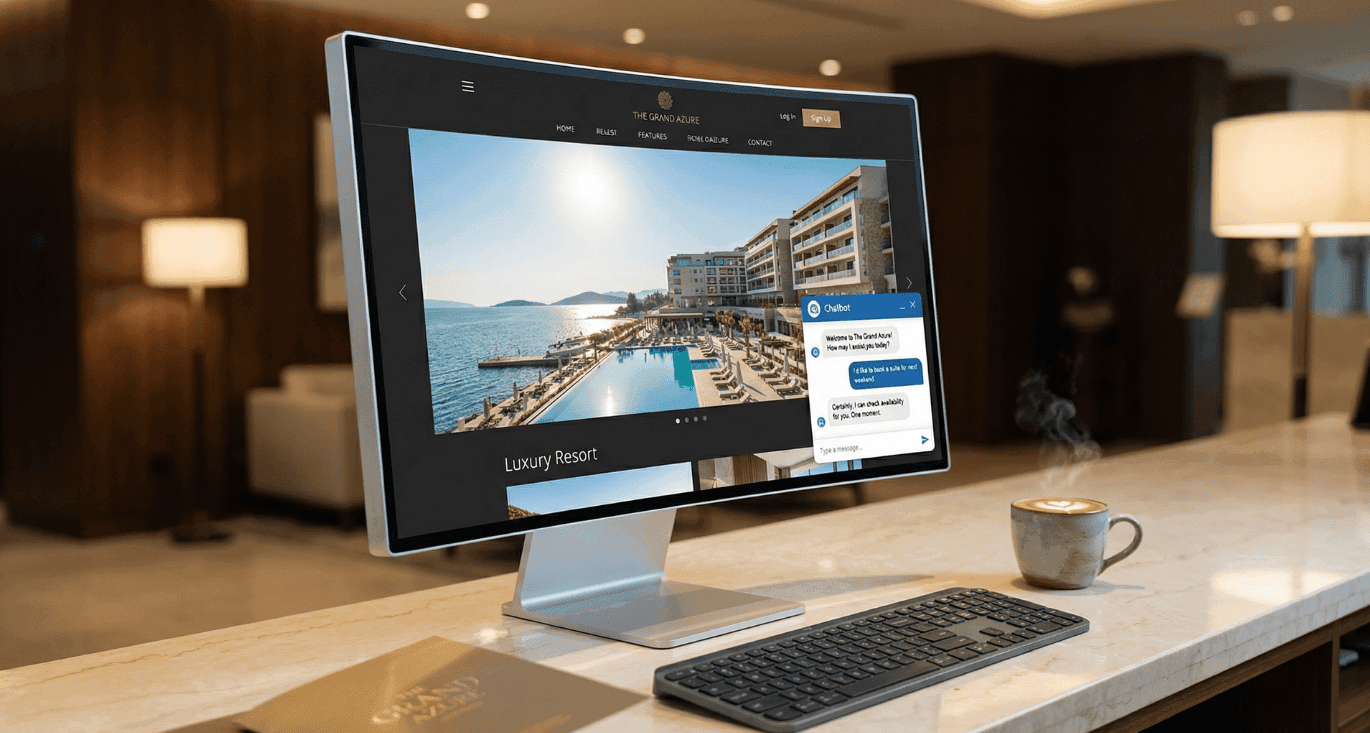
Stayntouch Guest Messaging, launched at ITB Berlin in February 2026, is an AI-driven communication tool fully embedded in the PMS. It centralizes guest conversations into a single inbox connected to live reservations and supports SMS, WhatsApp, Booking.com, Expedia, Airbnb, and web chat. According to Stayntouch, the system automates up to 95% of routine guest requests, saving an average of 15+ minutes per booking and roughly 25 hours per 100 reservations. The AI handles questions about room details, check-in instructions, and housekeeping requests. When conversations get complex, guests can seamlessly switch from AI responses to live staff support. Guest Messaging also generates automated upsell links during conversations, turning routine interactions into revenue opportunities for services like breakfast or parking. Real-time language translation is built in for communication between guests and staff.
roverIQ Ava arrived in January 2026 as a certified voice assistant integration built specifically for Stayntouch hotels. It addresses a well-documented industry problem: hotels miss up to 62% of incoming phone calls, according to vendor-sourced data from roverIQ. Ava answers calls around the clock, handles questions in natural language, provides information about hotel policies and amenities, and completes bookings directly in the PMS using real-time access to room availability and rates. Hotels can customize Ava's personality and scripts, and the system recognizes frustrated callers or complex requests and routes them to the front desk.
Stayntouch has also introduced UpsellPRO, an attribute-based selling tool that uses AI to let guests select individual room features (a specific view, floor type, or early check-in) rather than choosing from standard room categories. Research from Stayntouch and the NYU Tisch Center of Hospitality suggests this approach can increase revenue by up to 23% through personalized options priced dynamically based on demand.
Where are the guest-facing AI gaps in a Stayntouch setup?
The gaps in Stayntouch's AI offering are not failures. They are the natural result of a design philosophy that prioritizes being the best possible PMS rather than trying to be everything at once. Stayntouch calls this "best-in-class," and it is the same reason hotels choose specialized revenue management systems instead of relying on whatever comes bundled with their PMS. Understanding where the native AI stops and where third-party AI starts is key to building the right tech stack.
Fragmented guest context across channels. Guest Messaging handles text-based interactions. Ava handles phone calls. But these two systems operate independently. A guest who asks about late check-out via WhatsApp and then calls the hotel to confirm gets two separate interactions with no shared memory. In a fully connected setup, the voice system would already know what was discussed in chat, and vice versa. That cross-channel continuity requires a unified context layer that sits above individual channel tools.
Translation layers versus native multilingual reasoning. Guest Messaging includes real-time language translation, which typically means a translation layer on top of a standard response model. This works for straightforward exchanges, but it is fundamentally different from an AI that reasons natively in 50+ languages. A translation layer can miss cultural nuances, struggle with complex sentence structures, and introduce the slight awkwardness that internationally experienced guests notice immediately. For properties serving a global clientele, that distinction matters.
Reactive rather than proactive intelligence. Both Guest Messaging and Ava respond when a guest initiates contact. While Stayntouch allows proactive SMS messages, the intelligence to autonomously orchestrate outreach based on behavioral patterns is not part of the native toolset. A dedicated AI layer could detect that a returning guest always books a spa appointment on arrival and proactively suggest one the moment the room is ready, or notice a flight delay and adjust the check-in experience accordingly.
No visual or avatar-based concierge. Stayntouch's native AI operates through text and voice, but offers no solution for visual AI interaction. As lobby kiosks and in-room tablets become more common in the lifestyle and boutique hotels that make up Stayntouch's core market, the ability to deploy a visual avatar that greets guests and displays menus, maps, or activity recommendations represents a gap that only an external AI layer can fill.
Capability | Stayntouch Guest Messaging | roverIQ Ava | What's missing | What a dedicated AI layer adds |
Channels | SMS, WhatsApp, OTA messaging, web chat | Phone/voice | Unified context across text and voice | Single AI with memory across all channels |
Multilingual | Real-time translation layer | Natural speech in select languages | Native LLM reasoning in 50+ languages | Culturally aware responses without translation delay |
Proactive outreach | Template-based triggers | Not applicable | Behavior-driven, autonomous messaging | Proactive upsells and service suggestions timed to guest context |
Multi-turn conversations | Primarily FAQ and task routing | Natural conversation for booking flows | Complex, extended conversations across topics | Advanced conversation engine handling multi-topic requests |
Visual interface | Not available | Not available | Avatar for kiosks and in-room screens | Digital avatar concierge on any screen |
Cross-channel memory | Separate text system | Separate voice system | Shared interaction history | Full synchronization between chat, voice, and visual |
Sentiment detection | Basic dissatisfaction detection | Rule-based escalation to staff | Holistic analysis across all interactions | Real-time sentiment scoring with automatic escalation |
Visual interface | Not available | Not available | Avatar for kiosks and in-room screens | Digital avatar concierge on any screen |
Cross-channel memory | Separate text system | Separate voice system | Shared interaction history | Full synchronization between chat, voice, and visual |
Sentiment detection | Basic dissatisfaction detection | Rule-based escalation to staff | Holistic analysis across all interactions | Real-time sentiment scoring with automatic escalation |
How does a dedicated AI intelligence layer extend Stayntouch?
This is where the architecture gets practical. The open API approach that makes Stayntouch attractive to hotels also makes it one of the most integration-friendly PMS platforms for connecting a dedicated AI concierge. Lynn, built by Vertize, connects to Stayntouch's Connect API v2.0 and uses the platform's webhook system to create a real-time data loop between the PMS and the guest-facing AI.
The data flows in both directions:
Stayntouch to the AI concierge (triggers): When a guest books, the create_reservation webhook fires and the AI receives the reservation data to send a personalized welcome message in the guest's preferred language. At checkin, the concierge switches from pre-stay mode to in-stay mode, adjusting the type of information and services it offers. The room_assignment_succeed event lets the AI inform the guest of their specific room number and offer digital key access. Any updates to guest profiles via edit_guest are synchronized immediately so every interaction reflects the latest preferences.
AI concierge to Stayntouch (actions): The AI posts charges directly to the guest folio through the /reservations/{id}/transactions endpoint for room service, early check-ins, or add-on packages. It adds notes to guest profiles and updates room requests via the API. Through Stayntouch Pay, the concierge can send secure payment links during a chat conversation, turning a casual "Is breakfast included?" into a completed upsell without the guest ever calling the front desk.
For a typical Stayntouch hotel, a boutique or lifestyle property in an urban market, this integration solves a very specific problem. These are hotels where the front desk team is deliberately small, where the guest experience is supposed to feel effortless, and where international travelers expect service in their own language. Lynn handles guest interactions across chat, voice, and avatar channels in 50+ languages with native LLM reasoning, not a translation layer. It operates 24/7, remembers every interaction across every channel, and uses the real-time PMS data to personalize every response.
A guest texts in Mandarin about restaurant recommendations at 11 PM. The concierge responds in Mandarin, checks the PMS for the guest's loyalty tier, and suggests the hotel's partner restaurant with a reservation link and a late check-out offer for the next morning. The upsell posts automatically to the folio. No staff member needed to wake up. That is the practical difference between having two separate AI tools and having one intelligence layer connected to your PMS.
What does the Stayntouch and AI concierge integration look like technically?
Stayntouch's API uses OAuth 2.0 for authentication and provides a sandbox environment for development. The webhook architecture is lightweight: Stayntouch sends only the thread identifier (for example, the reservation ID) when an event fires, and the AI layer then makes a targeted API call to retrieve exactly the data it needs. This minimizes data traffic and keeps interactions fast.
API endpoint | What it enables for the AI concierge |
/hotels/{id}/charge_codes | Retrieves valid charge codes to post costs correctly to the guest folio |
/reservations/{id}/pay_link | Generates secure payment links for in-chat transactions |
/guests | Reads and writes guest profile data for deeper personalization |
/hotels/{id}/inventory | Checks real-time room availability for bookings made through the AI |
The technical integration does not require replacing anything in your Stayntouch setup. The AI concierge operates as an additional layer that reads from and writes to your PMS through the existing API. Your staff continues using Stayntouch exactly as they do today. The AI concierge simply adds a guest-facing intelligence layer on top. Hotels looking to assess their readiness for this kind of integration should focus on three things: clean guest profile data, active webhook configuration, and a clear internal process for handling AI-escalated requests.
Implementation typically takes two to four weeks. The first week covers API connection, webhook configuration, and data mapping. The second week focuses on training the AI on property-specific information: your amenities, policies, local recommendations, and upsell catalog. Weeks three and four run a supervised launch where staff monitors AI interactions and fine-tunes responses. No custom development is required on the Stayntouch side.
What results can Stayntouch hotels expect from adding an AI layer?
The financial case for extending Stayntouch with a dedicated AI intelligence layer comes down to three revenue levers.
First, recovered phone revenue. If hotels in the industry miss up to 62% of incoming calls (based on vendor-sourced data from roverIQ), a unified AI layer that handles both calls and text ensures that every guest interaction, regardless of channel, reaches a system that can complete a booking or upsell. Properties using voice AI report up to an 80% reduction in missed calls and a 27% increase in guest satisfaction scores, according to industry benchmarks.
Second, upsell conversion through contextual intelligence. When the AI knows the guest's booking details, loyalty status, and conversation history across all channels, it can offer the right upgrade at the right moment. This is particularly relevant for Stayntouch's core market of boutique and lifestyle hotels, where personalized touches drive disproportionate revenue. Stayntouch's own UpsellPRO data suggests attribute-based selling can lift revenue by up to 23%, and a connected AI layer extends that logic into every guest conversation.
Third, staff efficiency. With 65% of hotels reporting staffing shortages in 2025, the ability to automate routine guest interactions while keeping the human touch for complex requests is not a luxury. For the urban boutique properties that make up much of Stayntouch's portfolio, even small front desk teams can deliver a guest experience that feels fully staffed when Lynn handles the high-volume, low-complexity interactions around the clock.
The properties seeing the strongest results from this approach share a profile that maps closely to the typical Stayntouch hotel: they serve international guests, they prioritize experience over operational bulk, and they need their small teams to focus on high-value moments rather than repetitive questions. If you are running Stayntouch, you have already chosen a PMS that values flexibility and specialization. Adding a dedicated AI layer is the same philosophy applied to guest-facing intelligence.
How does Stayntouch compare to other PMS platforms on native AI?
Stayntouch occupies a distinctive position in the 2026 PMS landscape. Where Mews has invested heavily in agentic AI after a $300 million Series D focused on autonomous workflows, and Cloudbeds has built its Signals foundation model processing billions of data points for revenue and marketing intelligence, Stayntouch's AI strategy is more targeted: solve specific problems (missed calls, routine messaging) with dedicated tools rather than building a monolithic AI platform.
This is not a weakness. Stayntouch leads on mobile-first operations and the exclusive voice integration with Ava. Oracle OPERA Cloud takes the enterprise marketplace approach with 1,200+ OHIP endpoints. Each platform has a different AI philosophy, and each leaves a similar gap: none provides a comprehensive, multilingual, omnichannel guest-facing AI concierge as a native feature. That gap exists across the industry because building a world-class PMS and building a world-class conversational AI are fundamentally different disciplines.
FAQ
Does Stayntouch have a built-in AI chatbot?
Stayntouch launched Guest Messaging in February 2026, which automates up to 95% of routine guest requests across SMS, WhatsApp, OTA channels, and web chat. It handles check-in instructions, room details, housekeeping requests, and upsell offers. For complex queries, guests are seamlessly transferred to live staff. It is a strong messaging automation tool, though it differs from a full AI concierge that maintains cross-channel context and reasons natively in dozens of languages.
What is Stayntouch Guest Messaging?
Stayntouch Guest Messaging is an AI-powered communication tool embedded directly in the PMS. It connects a single inbox to live reservations and automates responses across SMS, WhatsApp, Booking.com, Expedia, Airbnb, and web chat. According to Stayntouch, it saves 15+ minutes per booking and roughly 25 hours per 100 reservations. It includes real-time translation, automated upsell link generation, and a smooth handoff to human agents when needed.
Can I add a voice agent to my Stayntouch PMS?
Yes. Stayntouch offers a certified integration with roverIQ Ava, an AI voice assistant that handles inbound calls 24/7. Ava accesses real-time room availability and rates from your PMS, answers questions about hotel policies, and completes bookings without human intervention. You can customize its personality and scripts, and it escalates complex or frustrated callers to the front desk automatically.
How does an AI concierge connect to Stayntouch technically?
Through Stayntouch's Connect API v2.0, which uses RESTful endpoints and event-driven webhooks. The AI receives real-time notifications for events like new reservations, check-ins, and room assignments. It can read guest profiles, post charges to folios, generate payment links through Stayntouch Pay, and check live inventory. Authentication uses OAuth 2.0. No modifications to the core PMS are required.
Does adding an AI layer require replacing Stayntouch?
No. A dedicated AI intelligence layer connects to Stayntouch through its existing open API. Your PMS continues operating exactly as before. The AI layer adds guest-facing capabilities on top: multilingual chat, voice, and visual avatar interactions that read from and write to your PMS data in real time. Your staff workflow does not change.
How many languages does Stayntouch AI support versus a dedicated concierge?
Stayntouch Guest Messaging offers real-time translation between guests and staff. The exact number of supported languages is not publicly specified. A dedicated AI concierge like Lynn uses native LLM reasoning in 50+ languages, which means it understands and responds in each language natively rather than translating from a base language. For hotels with a significant international guest mix, this produces more natural and culturally appropriate conversations.
What is the cost of adding an AI intelligence layer to Stayntouch?
Pricing varies based on property size, channel configuration, and the scope of AI capabilities activated. Because the AI layer connects through Stayntouch's standard API with no proprietary integration fees, there are no additional PMS-side costs. Vertize offers property-specific scoping to map the integration to your exact setup.
If you are running Stayntouch and want to see what an AI intelligence layer would look like connected to your property, the Vertize team can map it out in a 20-minute call. No pitch deck, just your PMS data and a practical walkthrough of what becomes possible.
Related posts
Infor HMS and AI: what's built in and what's missing
Infor HMS stands out as the leading enterprise Property Management System with robust AI-driven operational tools like…

Hotel PMS vendor AI news: Q1 2026 roundup (Mews, Cloudbeds, Oracle, Stayntouch, Infor)
In Q1 2026, hotel PMS vendors like Mews, Cloudbeds, and Stayntouch redefined hospitality tech with groundbreaking AI ad…
The AI layer your PMS is missing (and why it matters)
Your property management system (PMS) is the backbone of your hotel, handling reservations and billing, but it lacks th…
Ready to Transform Your Hotel?
Book a free strategy call and see exactly how Lynn would work in your property.